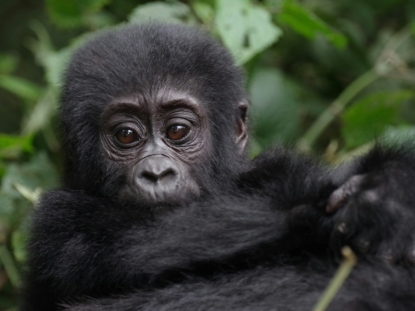
Gishwati-Mukura National Park is Rwanda’s newest and smallest national park, two regenerating montane forests in the west, home to chimpanzees, golden monkeys and rich birdlife. African Safari Trails arranges chimp and monkey tracking, guided forest hikes and birding here, with lodges and transfers handled. About two to three hours from Kigali and a short hop from Lake Kivu, it offers Rwanda’s quietest forest experience.
Gishwati-Mukura is Rwanda’s fourth and least visited national park, made of two forest blocks, the larger Gishwati and the smaller Mukura, on the ridge that divides the Congo and Nile watersheds in the west. After decades of clearing, the forest is growing back, and with it the chimpanzees, golden monkeys and birds that the deforestation nearly drove out. What it lacks in size it makes up for in quiet: you can track chimps here with no other visitors in sight. African Safari Trails arranges the tracking, the hikes and the lodge.
Chimpanzee Tracking in Gishwati-Mukura
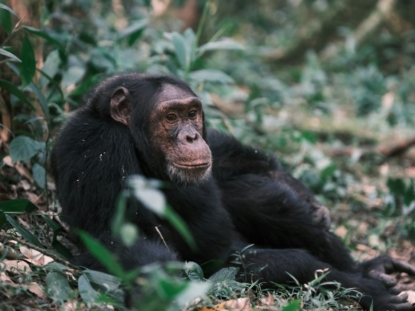
Chimpanzee tracking is the park’s flagship outing, a guided trek to find the small resident community of around twenty Eastern chimpanzees. They were cut off here when the forest linking this area to Nyungwe was cleared, and a morning in their company comes with a sense of a wild place pieced back together around them.
The trek starts early with a briefing at the reception centre, then heads into regenerating forest in search of the group, which is smaller and wilder than the habituated communities you find on chimpanzee tracking in Rwanda‘s bigger forests, so finding them takes patience. The reward is a quiet visit with almost no crowd. Permits are pre-booked. African Safari Trails secures the permit and arranges the early start.
A decade ago these hills were nearly silent. The forest had lost most of its cover and the chimpanzees with it. Track them today and you walk through a forest growing back in real time, the calls of the apes returning to slopes that had almost lost them.
Golden Monkey Tracking and the Park’s Primates
Golden monkey tracking is the lighter primate outing, following the bright orange monkeys that are endemic to this corner of Africa through the higher forest. Like the chimps, they are guided treks booked ahead, and the monkeys are lively and quick, fun to watch as they feed and move through the trees.
The park holds several other primates too, the striking L’Hoest’s monkey of the Albertine Rift, blue monkeys, black and white colobus, baboons and vervets, so a hike often turns up more than one species. Smaller mammals like duiker, tree hyrax and mongoose share the forest. African Safari Trails arranges golden monkey tracking and a primate focused walk.
Chimpanzee tracking
The flagship trek to a small community of around twenty Eastern chimpanzees, wilder and quieter than Nyungwe’s, in regenerating forest with almost no crowds.
Golden monkey tracking
A lighter trek after the bright orange monkeys endemic to the region, alongside L’Hoest’s, blue and colobus monkeys.
Bird watching
Over 230 species across the two forests, with a strong list of Albertine Rift endemics. Dawn walks are best.
Hikes and waterfalls
Guided forest trails of varying length through ferns and mossy trees to viewpoints and waterfalls, with night walks sometimes offered.
Bird Watching in a Regenerating Forest
Bird watching is one of the park’s strengths, with over 230 species recorded in Gishwati and more in Mukura, including a strong list of Albertine Rift endemics found nowhere else. The Rwenzori turaco, regal and purple-breasted sunbirds, strange weaver, red-throated alethe and Grauer’s swamp warbler are among the prizes.
The small size works in a birder’s favour, packing the specials into a compact area reachable on well kept trails, and the regenerating forest makes the skulking species a little easier to see than in deeper woods. Dawn walks with a specialist guide find the most. African Safari Trails arranges a birding guide and the early start.
Forest Hikes and Waterfall Walks
Forest hiking is a pleasure in its own right here, on guided trails that wind through tree ferns, mossy hardwoods and quiet streams with the forest closing in around you. The trails come in different lengths and grades, from gentle walks to longer climbs, several of them leading to waterfalls tucked into the hills.
Because the park is small and uncrowded, a hike feels like having a secret forest to yourself, good for photographers and slow walkers alike, and the long distance Congo Nile Divide route passes nearby for the ambitious. Night walks are sometimes arranged for nocturnal wildlife. African Safari Trails matches a trail to your pace.
A Conservation Comeback Story
Part of what makes Gishwati-Mukura worth the detour is what it represents. The forest was nearly lost, shrinking by over ninety percent through resettlement, mining and grazing after the 1990s, before a long restoration effort began to knit the two blocks back together and bring the wildlife back.
The park gained full status only recently and was named a UNESCO Biosphere Reserve, with management geared to balancing conservation, tourism and the surrounding communities. Visiting puts your money directly into that recovery, and cultural and farm visits nearby make the link clear. African Safari Trails adds a community visit to the forest days.
Where Gishwati-Mukura Is and Getting There
The park sits in western Rwanda across the Rutsiro, Ngororero and neighbouring districts, reached on the scenic Karongi to Rubavu road about two to three hours from Kigali. Its position makes it an easy day trip from lodges on the shores of Lake Kivu, or a stop between the lake and Volcanoes National Park to the north.
All activities begin early at the park reception centre, so staying close the night before helps. The setting, high on the Congo Nile ridge, gives a cool highland climate and misty mornings. African Safari Trails arranges the transfers and times the trip around the early starts.
Best Time for a Gishwati-Mukura Safari
The park is open all year, and the drier months make the forest trails firmer for tracking and hiking, while the wet season brings deep green and the best birding. Rain can fall any time at this altitude, so a jacket is wise whenever you come.
June to September
The long dry season, the easiest for chimp and monkey tracking and forest hikes, with firmer, less slippery trails.
December to February
The shorter dry spell, also good for trekking and easy to pair with Lake Kivu and the gorillas to the north.
March to May and October to November
The wetter months, the forest greenest and the birding strongest, with more food keeping the chimps closer, though trails are muddier.
Pair Gishwati-Mukura with Lake Kivu and pack for mud. The park sits a short drive from Lake Kivu and on the way toward Volcanoes, so the easiest way to fit it in is as a forest morning bracketed by lakeside nights, which also breaks up the drive north for the gorillas. Bring waterproof boots and a rain jacket whatever the season, since the regenerating forest stays damp and the trails get slippery. African Safari Trails builds the park into a Kivu and gorilla route and advises on kit.
Planning Your Visit and Forest Experience
Gishwati-Mukura suits travellers who have seen Rwanda’s headline parks and want somewhere quieter, or who are passing the western lakes and want a half day in the forest. A morning covers a chimp or golden monkey trek, with a hike or birding added if you have longer, and most people visit as part of a wider western loop rather than a trip on its own.
Accommodation runs from the eco luxury Gishwati Lodge, with its handful of forest cottages, to community guesthouses and lodges around Rubavu and Lake Kivu. African Safari Trails arranges the permits, lodge and transfers as one trip.
Gishwati-Mukura National Park FAQ
How much does it cost to visit Gishwati-Mukura?
Chimpanzee tracking is the main paid activity, at roughly 250 US dollars per person including park entry, paid to the Rwanda Development Board, with golden monkey tracking and guided walks charged at lower rates. A longer chimp habituation outing is sometimes offered. Costs are modest next to the gorilla permit, and the park is far quieter. African Safari Trails confirms the current fees and secures the permits for you.
How does Gishwati-Mukura compare to Nyungwe?
Nyungwe is larger and more established, with a bigger chimpanzee population, the canopy walk and more infrastructure, so first time visitors often choose it. Gishwati-Mukura is smaller, wilder and far quieter, with a tiny chimp community and a real sense of a forest recovering, which appeals to returning travellers and those wanting solitude. African Safari Trails advises on which fits your trip, or fits both in.
How hard is chimpanzee tracking here?
It can be demanding and uncertain. The community is small, around twenty, and less used to people than Nyungwe’s habituated groups, so the trek through steep, regenerating forest can take a while and sightings are not guaranteed. A reasonable level of fitness and patience help. The reward is a quiet, genuine forest morning. African Safari Trails sets honest expectations and arranges a guide and porter if needed.
How do I get there and where do I stay?
The park is about two to three hours from Kigali on the Karongi to Rubavu road, easy to reach from Lake Kivu or en route to Volcanoes. Gishwati Lodge offers eco luxury forest cottages inside the area, with community guesthouses and lodges around Rubavu and the lake for other budgets. African Safari Trails arranges the transfer and a lodge to suit your route and budget.
Is it worth visiting such a small park?
For the right traveller, yes. If you want crowds-free forest, rare primates and the story of a wilderness growing back, Gishwati-Mukura rewards the detour, especially paired with Lake Kivu. If your time is short and you have not seen Nyungwe or the gorillas, those come first. African Safari Trails helps you weigh it against the rest of a Rwanda plan.
Can I combine it with other parks?
Yes, and that is how most people visit. It slots naturally into a western route with Lake Kivu and Volcanoes National Park, and can be tied into a fuller circuit taking in Nyungwe in the south and Akagera in the east. Its position breaks up the drive between the lake and the gorillas. African Safari Trails maps the loop at a comfortable pace.
Plan Your Gishwati-Mukura Visit with African Safari Trails
Knowing whether this quiet young park earns a place in your trip, and how to slot it between Lake Kivu and the gorillas, goes more smoothly with someone who books Rwanda’s west often, so the forest morning fits without padding the drive. African Safari Trails has spent years arranging Gishwati-Mukura visits, from chimpanzee and golden monkey tracking to birding and the waterfall hikes, with the lodge and transfers tied into a wider Rwanda safari loop through the west. They will tell you honestly whether it suits your plan, and the permits and logistics are handled quietly in the background.
Want a proper quote, or just a steer on whether to include it? Reach out to African Safari Trails and a real person gets back to you.