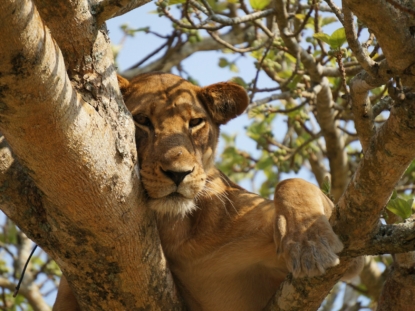
The Great Migration in East Africa is the year-round movement of nearly two million wildebeest and zebra around the Serengeti-Mara ecosystem of Tanzania and Kenya. African Safari Trails arranges Great Migration safaris in the Serengeti and Maasai Mara, timed to the herds. Calving, river crossings and predator drama unfold across the year.
The Great Migration is the largest movement of land animals on earth, a vast, year-round circuit of wildebeest, zebra and gazelle following the rains around the linked plains of Tanzania’s Serengeti and Kenya’s Maasai Mara. From the calving herds of the south to the heart-stopping river crossings of the north, it offers a different spectacle in every season. Seeing it well is all about timing and position. African Safari Trails plans a safari around where the herds will be.
Where to go
Great Migration across East Africa.
Why See the Great Migration on Safari
The migration is one of the natural wonders of the world and tops most lists of things to do in East Africa. The sheer scale, close to two million animals on the move, the drama of the river crossings, and the predators that shadow the herds make it a wildlife spectacle nothing else quite matches.
It crosses two countries and runs all year, so there is always something to see, whether newborn calves, massed herds or a crocodile-lined river. The trick is knowing where the herds are. The spectacle rewards good planning. African Safari Trails times a trip to the phase you want to see.
The Year-Round Cycle
The migration is not a single event but a continuous loop driven by the rains and the grazing they bring. Broadly, the herds calve in the southern Serengeti early in the year, move north and west through the middle of the year, cross into Kenya’s Maasai Mara around the dry season, and return south as the rains come again.
This means the migration in Tanzania runs for much of the year and the migration in Kenya peaks in the famous river-crossing months. The timing shifts each year with the weather. Following it is a moving target. African Safari Trails tracks how the season is running.
Calving in the Southern Serengeti
Early in the year, the herds gather on the short-grass plains of the southern Serengeti and the Ndutu area to calve, with hundreds of thousands of wildebeest born in a few short weeks. The concentration of newborns draws intense predator action from lion, cheetah and hyena.
This is one of the migration’s most dramatic phases, less famous than the river crossings but full of life and death on the open plains. It suits travellers wanting big herds and predators. The calving is a spectacle in itself. African Safari Trails bases a green-season safari on the calving grounds.
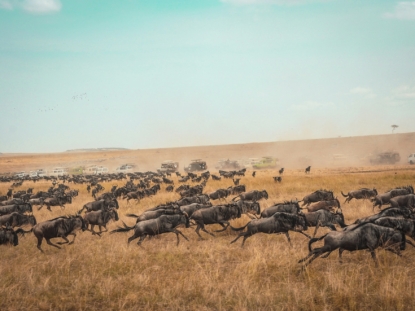
From the rim of a low rise the herd stretches to the horizon in every direction, a living carpet of wildebeest grunting and shuffling across the plain, threaded with zebra and trailed by the slow, watchful shapes of lions. The dust hangs gold in the afternoon light, the noise is a constant low roar, and you realise you are watching not a herd but a whole moving nation of animals, following the rain across a land too vast to fence.
The Grumeti and Western Serengeti
As the plains dry, the herds push north and west through the central and western Serengeti, where the Grumeti River presents the first of the great water obstacles. The crossings here, earlier in the year than the famous Mara ones, can be dramatic, with large crocodiles lying in wait.
This western-corridor phase is quieter and less crowded than the later Mara crossings, a good choice for those wanting the spectacle without the vehicles. The herds mass on the riverbanks before plunging across. It is an underrated time to go. African Safari Trails can target the western Serengeti.
Mara River Crossings
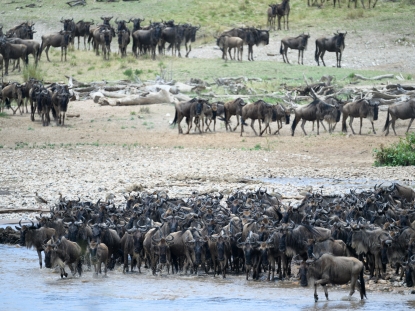
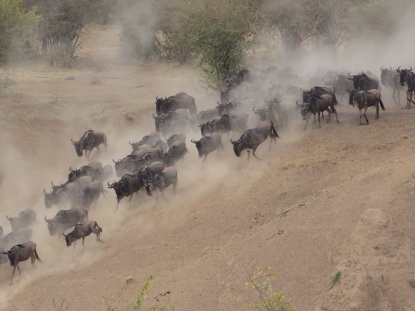
The migration’s most famous moment comes when the herds reach the Mara River, on the Tanzania-Kenya border and within Kenya’s Maasai Mara, from around the middle of the year into autumn. The massed wildebeest gather on the banks and plunge into the crocodile-filled water in a chaos of dust and noise.
These crossings, most likely in the Kenyan dry season, are utterly unpredictable, so seeing one takes patience and the right position, but few wildlife sights compare. They are never guaranteed. The drama is unmatched. African Safari Trails positions you where the odds are best.
Following the Herds: Tanzania and Kenya
Because the migration moves between two countries, where you go depends on when you travel. For the calving and the Grumeti crossings, the Serengeti is the place; for the famous Mara River crossings, Kenya’s Maasai Mara comes into its own, though the Tanzanian side of the Mara also sees crossings.
Some trips combine both countries to follow the herds, while others pick the country and season that suit. Matching the destination to the date is everything. The herds set the itinerary. African Safari Trails plans around the herds’ likely position.
Predators, Big Cats and Game Drives
The migration is as much about the hunters as the herds. The arrival of so much prey concentrates lion, cheetah, leopard and hyena, and the river crossings draw huge crocodiles, so game drives in migration season offer some of the finest predator viewing in Africa.
Even between crossings the plains teem with life, dust and movement, a spectacle in their own right on every drive. The cats are never far from the herds. The action runs all day. African Safari Trails builds drives around both the herds and the predators.
Calving season
Hundreds of thousands of wildebeest born on the southern Serengeti plains early in the year, with intense big-cat action.
Grumeti crossings
The first great river crossings in the western Serengeti, dramatic and far less crowded than the later Mara crossings.
Mara River crossings
The famous plunge into crocodile-filled water in Kenya’s Maasai Mara around the dry season, never guaranteed but a true spectacle.
Predator drama
Lion, cheetah, leopard, hyena and crocodile shadowing the herds, giving some of Africa’s best predator viewing.
Watching the Crossings and the Herds
Seeing the migration well is about position and patience. For the river crossings, being based near the crossing points, in the Maasai Mara or northern Serengeti, and giving yourself several days greatly improves your chances, since no one can predict the exact day or hour.
The private conservancies and quieter sectors offer the herds with fewer vehicles, while a longer stay lets you wait out the unpredictable action. Flexibility is the key to the crossings. The herds reward those who wait. African Safari Trails picks the base and length for the best odds.
Balloon Safaris Over the Migration
For a rare perspective, a dawn hot air balloon safari over the Serengeti or the Maasai Mara lets you drift silently above the herds as the sun rises, with the migration stretching to the horizon below. It is the most magical way to see the scale of it.
The flight ends with a champagne breakfast on the plains, a memorable addition to a migration trip in either country. The aerial view is unlike any from the ground. The light at dawn is glorious. African Safari Trails can add a balloon flight to a migration safari.
Best Time for a Migration Safari
There is no single best time, only the best time for the phase you want, since the migration runs all year. Calving is early in the year, the Grumeti crossings mid-year, and the Mara River crossings in the dry season.
January to March (calving, Tanzania)
The herds calve on the southern Serengeti plains, with masses of newborns and intense predator action, away from the crowds.
May to July (moving north, Tanzania)
The herds push through the western Serengeti with the Grumeti crossings, building toward the Mara, with fewer vehicles than the peak.
July to October (Mara crossings, Kenya)
The famous Mara River crossings in Kenya’s Maasai Mara and the northern Serengeti, the peak window, so book well ahead.
Match the country and season to the phase you want, stay several nights, and keep plans flexible. The migration is in a different place in every season, so decide first what you most want to see: the calving and predators early in the year point to the southern Serengeti, while the famous river crossings from around July to October point to Kenya’s Maasai Mara and the northern Serengeti. The crossings follow the herds and the rains rather than a calendar, so no operator can promise one on a given day, and the best insurance is time: plan at least three or four nights in the right area. The top camps near the crossing points sell out twelve to eighteen months ahead for the peak, so book early, and consider a private conservancy for quieter viewing. African Safari Trails handles the timing, placement and booking.
Planning a Great Migration Safari
A migration trip centres on the Serengeti in Tanzania or the Maasai Mara in Kenya, reached by road or short flights from Arusha, Nairobi or the coast. The key choices are the season, which dictates the country and area, and a base near where the herds will be.
Because the herds move and the best camps book out far ahead, a migration safari rewards early, expert planning. Getting the timing and position right is everything. The herds do the rest. African Safari Trails plans the whole trip around the migration.
Great Migration in East Africa FAQ
When is the best time to see the Great Migration?
It depends on the phase: calving in the southern Serengeti is around January to March, the Grumeti crossings around May to July, and the famous Mara River crossings in Kenya’s Maasai Mara and the northern Serengeti from about July to October. African Safari Trails times your safari to the phase you want.
Should you go to Tanzania or Kenya for the migration?
Both, depending on timing. Tanzania’s Serengeti holds the herds for most of the year, including the calving, while Kenya’s Maasai Mara is the place for the famous river crossings in the dry season. Some trips combine the two. African Safari Trails picks the country to match your dates.
Are the river crossings guaranteed?
No. The crossings are driven by the herds and the rains, not a schedule, so they are completely unpredictable and never guaranteed, even in peak season. Staying several nights near the crossing points greatly improves your odds. African Safari Trails positions you for the best chance.
How much does a migration safari cost?
It varies widely with the season, the camp and the country, and the peak crossing months carry premium rates, especially at camps near the rivers. Park fees, flights and vehicle choice all affect the total. Booking early secures both space and value. African Safari Trails gives a clear, all-in quote.
How many days do you need?
At least three or four nights in the right area is wise, since the crossings and the herds are unpredictable and more time raises your chances. A trip following the herds across both countries needs longer. African Safari Trails sets the right length for the phase you want.
Can you see the migration from a balloon?
Yes, a dawn balloon safari over the Serengeti or the Maasai Mara drifts silently above the herds as the sun rises, ending with a bush breakfast. It is a memorable way to see the scale of it. African Safari Trails can add a balloon flight to a migration safari.
Plan Your Great Migration Safari with African Safari Trails
Matching the country and season to the phase you want, choosing a base near the herds, securing camps that book out a year ahead and giving yourself enough nights for an unpredictable spectacle all go more smoothly with someone who follows the migration year after year, so you arrive in the right place at the right time rather than chasing herds that have moved on. African Safari Trails has spent years building migration safaris across the Serengeti and the Maasai Mara, with guides who know the herds’ patterns and the crossing points. They will tell you straight what the season is doing, which country to choose and how long to stay, and handle the flights, camps and fees quietly in the background.
Want a proper quote, or just a steer on timing a migration trip? Reach out to African Safari Trails and a real person gets back to you.