The Great Migration in Tanzania is the year-round movement of around 1.5 million wildebeest and zebra across the Serengeti, famous for the dramatic calving season and the Mara River crossings. African Safari Trails arranges Great Migration safaris timed and placed to follow the herds, from Ndutu calving to the northern river crossings. Unfolding across the Serengeti and Ngorongoro ecosystem, it is one of the greatest wildlife spectacles on earth.
The Great Migration is the reason many travellers come to Tanzania in the first place, and it is worth the trip. Roughly a million and a half wildebeest, joined by hundreds of thousands of zebra and gazelle, move in a vast clockwise loop through the Serengeti the whole year round, following the rains and fresh grass. The famous river crossings are only one act: calving on the southern plains and the long columns on the move are just as compelling. Timing and placement are everything, and that is what African Safari Trails gets right.
Following the Great Migration on Safari
A Great Migration safari is really about being in the right part of the Serengeti at the right time of year, because the herds never stop moving. There is no single start or end point, only a rolling, circular movement of around 1.5 million wildebeest and zebra triggered by the rains, the Tanzanian heart of the Great Migration in East Africa, spread across an ecosystem far too big to see all at once.
The herds spend roughly nine months of the year in Tanzania’s Serengeti and the edge of the Ngorongoro Conservation Area, crossing into Kenya only for a few. Knowing where they are likely to be in your travel month is the key to a good migration safari. African Safari Trails times and places your trip to meet the herds.
Calving Season on a Ndutu Safari
The calving season is one of the migration’s great events and a fine reason for a Ndutu safari from late January into March. On the short-grass plains of the southern Serengeti and the Ndutu area, around half a million wildebeest calves are born within a few weeks, often thousands a day at the peak in February.
This concentration of newborns draws lions, cheetahs and hyenas, so predator action is intense and often plays out in daylight, making it a rich time for game viewing. It is also less crowded than the river-crossing season. The green plains are at their best. African Safari Trails bases you in the south for the calving.
The river crossings get the headlines, but the calving season may be the migration at its most astonishing. Across a few short weeks on the southern plains, half a million wildebeest are born, thousands every day, all timed so the predators cannot possibly eat them all. It is the engine of the whole migration, played out quietly on green grass while the lions and cheetahs feast.
Grumeti River Crossings in the Western Corridor
As the plains dry out, the herds push north and west through the central Serengeti, often in columns many kilometres long, and around June they reach the Western Corridor and the Grumeti River. Here they face their first big water obstacle, with resident crocodiles and hippos in the slow green river.
The Grumeti crossings are smaller and less predictable than the famous Mara crossings, but they are dramatic and far less crowded, and June also brings the rut, when males clash for mates. It is a fine, quieter window for a migration safari. African Safari Trails bases you in the west for the Grumeti.
The Mara River Crossings
The Mara River crossings are the migration’s best-known act, drawing travellers from around the world to the northern Serengeti from roughly July to October. The herds mass on the banks, hesitate, then plunge across the crocodile-filled river in their thousands, with many lost to the water and the predators.
Crossings cannot be predicted to the day, as they hinge on the rains and the herds’ own mood, so several nights in the north greatly improve your chances, with August often the peak. October brings crossings, reverse crossings and the start of the southward return. African Safari Trails bases you near the crossing points for the best odds.
Game Drives and the Moving Herds
You follow the migration on game drives in Tanzania, working out from a camp placed near where the herds are that month, whether the calving plains, the Western Corridor or the northern river country. The drives also turn up the predators that shadow the herds, the real drama of a migration safari.
Because the herds move and the crossings are unpredictable, a few nights in one area beats rushing between regions, and a guide with current sightings reports is worth a great deal. Resident wildlife around Seronera fills any quiet days. African Safari Trails plans drives and placement around the herds’ likely position.
Calving season
Late January to March on the southern Ndutu plains, with half a million calves born and intense daytime predator action.
Grumeti crossings
Around June in the Western Corridor, the herds’ first river challenge, dramatic and far quieter than the Mara.
Mara River crossings
July to October in the northern Serengeti, the famous crocodile-filled crossings, with August often the peak.
The herds on the move
Columns many kilometres long crossing the central and western plains, with zebra and gazelle mixed in.
Predators, Birds and Wildlife Watching
Wildlife watching on a migration safari is about far more than wildebeest, because the herds pull in Tanzania’s great predators. Lions, cheetahs, hyenas and leopards all follow and hunt the migration, and the crossings and calving draw crocodiles and scavengers, so big drama is never far off.
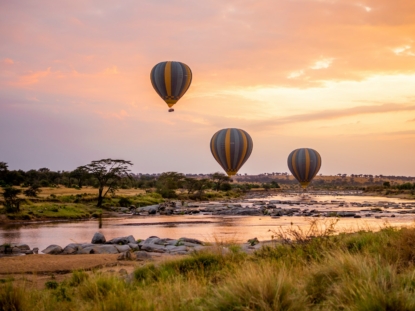
The Serengeti also holds strong resident wildlife year-round, especially around Seronera, plus several hundred bird species, so even between migration highlights the game viewing stays excellent, and a dawn balloon safari over the herds is a magical way to take in the scale. The mix keeps every drive worthwhile. African Safari Trails can pair you with guides who read the predators and the herds.
Where to Stay to Follow the Migration
The trick to a migration safari is staying in the right part of the Serengeti for your dates, which often means mobile or seasonal camps that move with the herds. For the calving you want the south near Ndutu, for the Grumeti the Western Corridor, and for the Mara crossings the far north.
Lodges and camps near the crossing points and calving grounds are limited and book out far ahead, so planning early is wise, especially for the peak July to October window. Permanent lodges suit the calving and central areas. African Safari Trails secures camps placed where the herds will be.
Best Time for a Great Migration Safari
The best time for a Great Migration safari depends entirely on what you want to see, since the herds are somewhere in the Serengeti all year. The calving and the river crossings are the two headline windows, in different seasons and different parts of the park.
January to March (calving)
The southern Ndutu plains fill with newborn calves and hunting predators, green and less crowded than the crossing season.
June (Grumeti and the rut)
The herds reach the Western Corridor and the Grumeti River, with early crossings and the rut, ahead of peak season.
July to October (Mara crossings)
The famous Mara River crossings in the northern Serengeti, the most dramatic and most visited window, peaking around August.
Pick your event, give it time, and book early. Decide first whether you are chasing the calving and predator action of January to March or the river-crossing drama of July to October, because the two need different months and different parts of the Serengeti. Allow at least three or four nights in the right area, since crossings cannot be predicted to the day and the herds move, and book a year or more ahead for the limited camps near the crossings and calving grounds. African Safari Trails times, places and secures the trip around the herds.
Planning Your Migration Safari
A migration safari almost always builds on a wider Serengeti and northern-circuit trip, flying between the airstrips that serve each region so you can be dropped where the herds are. Road trips work too, especially for the central and southern Serengeti, often via Ngorongoro and Tarangire.
Most migration trips run around five to ten days, enough to settle in one region and add Ngorongoro or the calving plains, and a flexible itinerary with guides reporting from the ground pays off when the herds shift. Early booking is key for peak season. African Safari Trails arranges the flights, camps and timing.
The Great Migration in Tanzania Safari FAQ
How much does a Great Migration safari cost?
Migration safaris vary widely with season and comfort, broadly running from a few hundred to well over a thousand US dollars per person per day all-in, with the July to October crossing season and northern camps the most expensive. Serengeti park fees of roughly 70 to 80 dollars per day plus VAT sit on top of camp, vehicle and flight costs. African Safari Trails builds a clear, all-in quote.
When are the Mara River crossings?
The Mara River crossings happen in the northern Serengeti roughly from July to October, with August often the peak, though they cannot be predicted to the day as they depend on the rains and the herds. Several nights in the north greatly improve your chances of seeing one. African Safari Trails bases you near the crossing points to maximise the odds.
When is calving season?
Calving runs from late January into March on the southern Serengeti and Ndutu plains, peaking around February, when around half a million calves are born within a few weeks, drawing intense, often daytime predator action. It is greener and less crowded than the crossing season. African Safari Trails bases you in the south for the calving.
Can you guarantee seeing a river crossing?
No. Crossings depend on the rains and the unpredictable herds, so no operator can promise one on a given day, which is why several nights in the northern Serengeti during the season are recommended to improve your chances. African Safari Trails places you well and sets honest expectations.
How many days do I need for a migration safari?
Around five to ten days works well, allowing at least three or four nights in the right region for your chosen event plus time for Ngorongoro or the calving plains. Rushing between regions in a day or two rarely pays off. African Safari Trails sets the length around your dates and what you want to see.
Where do the herds go in Kenya?
For roughly three months around July to October, part of the migration crosses the Mara River into Kenya’s Maasai Mara, where the migration in Kenya reaches the northernmost point of the loop, before circling back south into Tanzania. The bulk of the year is spent in the Tanzanian Serengeti. African Safari Trails focuses on the Tanzanian side and can advise on cross-border options.
Plan Your Great Migration Safari with African Safari Trails
Timing the trip for the calving or the crossings, placing you in the right part of the Serengeti, and securing the limited camps near the herds all go more smoothly with someone who tracks the migration closely, so you land where the action is rather than where it was last month. African Safari Trails has spent years building migration safaris, with guides who read the rains, the herds and the predators by instinct rather than a brochure. They will tell you straight what your travel dates are likely to deliver and how to improve the odds, and shape the trip around the calving, the crossings or the moving herds, with the flights, camps and timing handled in the background.
Want a proper quote, or just a steer on when to travel for the migration? Reach out to African Safari Trails and a real person gets back to you.