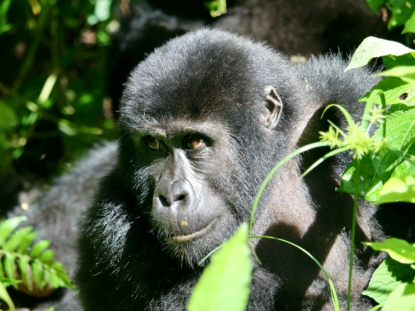
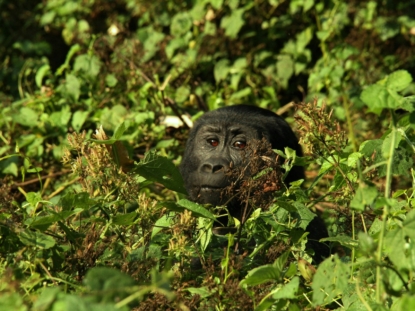
Gorilla trekking in Uganda means hiking into mountain rainforest to spend one hour with a habituated mountain gorilla family, and it happens in just two parks, Bwindi Impenetrable and Mgahinga Gorilla, in the southwest. African Safari Trails organizes gorilla trekking safaris to both, securing the permit and matching your lodge to the right trekking sector. Uganda holds close to half the world’s remaining mountain gorillas, the larger share of a species that has recovered past a thousand animals, and it is one of two homes for gorilla trekking in East Africa.
The day is the same wherever you trek. You report to a ranger station for an early briefing, get assigned to one gorilla family, then set off on foot with rangers and trackers who have gone ahead to find the group. The walk can take under an hour or most of the morning, depending on where the gorillas fed and nested overnight, and once you reach them you get exactly one hour. Only eight people visit each family per day, which is why permits are limited and book out far ahead. African Safari Trails handles the whole chain, from permit to trailhead.
How a Gorilla Trekking Safari Works
A gorilla trekking safari starts before dawn, with a transfer to the trailhead for an eight o’clock briefing where rangers explain the rules and split visitors into groups of up to eight, one per gorilla family. Trackers set out earlier to locate the family from where it nested, and they radio the position back, so the guides know roughly where to lead you.
Then you walk, through dense forest with no real path, following the trackers up and down steep, often muddy ground. When the family is found, the clock starts on your one hour with them, kept at a set distance while they feed, groom, rest and the young ones tumble about. Success rates sit well above ninety percent, since the trackers do the finding. African Safari Trails arranges a porter for anyone who wants the pack carried and a steadying hand.
Mountain Gorilla Trekking Safari in Bwindi’s Four Sectors
Most mountain gorilla trekking in Uganda happens in Bwindi Impenetrable National Park, which holds around twenty habituated families across four trekking sectors and the bulk of the country’s permits. Buhoma in the north is the oldest and most accessible, with gentler ground and the widest lodge choice. Ruhija in the east sits higher and cooler, quieter and good for birders.
Rushaga in the south has the most families, so the best permit availability, while Nkuringo, also in the south, is the most demanding, with treks that drop into valleys and climb back up to big Virunga views. Your sector decides which lodge you use and how hard the trek is likely to be. African Safari Trails books the sector that fits your fitness and your wider route.
Gorilla Trekking Safari in Mgahinga and the Virunga Volcanoes
A gorilla trekking safari in Mgahinga Gorilla National Park is the quieter alternative, set among the Virunga volcanoes on the Rwanda and DR Congo borders. The park has a single habituated family, the Nyakagezi group, a relaxed troop of around ten led by several silverbacks, and the scenery of the three volcano cones is a reward in itself.
The catch is that Nyakagezi is a transboundary family that sometimes crosses into Rwanda or the DR Congo, so there are spells when no gorillas are in the Ugandan sector. When they are home, the trek tends to be shorter than the deep Bwindi forests, and you can pair it with golden monkey tracking and volcano climbs. African Safari Trails checks the family’s recent movements before committing your dates.
The Gorilla Habituation Experience in Rushaga
The gorilla habituation experience is the deeper option, offered only in Bwindi’s Rushaga sector. Instead of one hour, a group of no more than four spends up to four hours with a family still being accustomed to people, moving alongside the researchers and trackers who do the daily work of habituation.
The gorillas are less settled around humans, so the time feels rawer and less staged, and the small group and long contact suit photographers and serious primate watchers. It is a longer, harder day and costs more than a standard trek. Places are very few, so this one needs booking well ahead, which African Safari Trails handles together with a Rushaga lodge.
Fitness, Age and Porters for Your Gorilla Trek
A gorilla trek asks for reasonable fitness rather than anything athletic. The forest is steep, muddy and humid, and a trek can run from one to six hours each way, so being comfortable walking for several hours on rough ground matters more than speed. There is no upper age limit, and trekkers in their seventies and eighties complete it every year, while the minimum age is firmly fifteen, checked by passport at the gate.
Porters are available at every trailhead and worth hiring even if you are fit, since they carry your pack, steady you on the slopes and put income into the local community. For those who cannot manage the walk, a sedan chair carried by a team of porters can be arranged in advance. African Safari Trails sorts the porters, the chair if needed, and flags which sector suits your fitness honestly.
The Rules of a Gorilla Trekking Safari
Every gorilla trekking safari runs under strict rules, all built to protect animals that share almost all of our DNA and can catch our illnesses. You keep a set distance of about seven metres, stay only one hour, and anyone with a cold or flu is asked not to trek that day. No flash photography, no eating or smoking near the gorillas, and you keep your voice low.
If a gorilla approaches or a silverback charges, the guidance is to crouch, look down and never run. The rangers brief all of this before you enter the forest and direct you throughout. African Safari Trails makes sure you arrive knowing what to expect, so the hour with the family goes calmly.
Best Time for Gorilla Trekking in Uganda
Trekking runs all year, since the forests are wet by nature, but the drier months make the trails firmer and the climbs less of a slog. The wetter months bring heavier mud and a higher chance of rain on the trek, traded for greener forest, fewer people and discounted low season permits in some months.
June to September
The main dry season and the busiest trekking window, with the firmest trails. Permits sell out months ahead, so book early.
December to February
A second drier spell, popular over the holidays, with good conditions and slightly fewer crowds than the mid year peak.
April, May and November
The wet months, with discounted permits in some years. Muddier, harder treks but greener forest and the quietest trails.
Book early and match the lodge to the permit. Permits are capped at eight per family per day and go fast for the dry season, so reserve three to six months ahead, and longer for December. Just as important, your lodge should sit in the same sector as your permit, so you are not facing a long pre dawn transfer before an already hard trek. African Safari Trails handles both.
Planning and Booking Your Gorilla Trek
A gorilla trek is usually the centrepiece of a wider Uganda trip, and it takes a little planning to slot in. Permits are tied to a specific date and family, and full payment is now required at the time of booking, so dates need to be firm before you commit. Choosing the right sector, then a lodge to match, is the next decision, followed by how you reach the park.
By road, Bwindi and Mgahinga are eight to nine hours from Kampala, which is why many people fly to the Kihihi or Kisoro airstrips instead, or break the drive in Queen Elizabeth National Park. Most trips pair the gorillas with chimpanzee tracking in Kibale and the western parks, one leg of a fuller Uganda safari. African Safari Trails maps the permit, the lodge and the travel so the trek lands without a rushed dawn or a wasted day.
Gorilla Trekking in Uganda FAQ
How much does a gorilla trekking permit cost in Uganda?
A standard gorilla permit currently costs 800 US dollars for foreign non residents, 700 dollars for foreign residents and 300,000 Uganda shillings for East African citizens, and it covers park entry, the ranger guide, the trackers and one hour with the gorillas. In some years the wildlife authority releases discounted low season permits, around 600 dollars, for the wetter months of April, May and November. African Safari Trails confirms the current figure and availability when you book.
How much is the gorilla habituation experience?
The four hour habituation experience in Bwindi’s Rushaga sector costs about 1,500 US dollars per person, well above a standard trek, and only four people join each day. It buys far more time with a family still being accustomed to humans, alongside the research team. Because places are so few, it needs booking well in advance, which African Safari Trails handles together with a Rushaga lodge.
How fit do I need to be, and is there an age limit?
You need reasonable fitness and the ability to walk for several hours on steep, muddy ground, but not athletic conditioning, and porters and even sedan chairs help those who need it. The minimum age is firmly fifteen, verified by passport on the trekking day, and there is no upper limit. Choosing a gentler sector like Buhoma and hiring a porter make it manageable for most able walkers. African Safari Trails advises on the right sector for your fitness.
Will I definitely see the gorillas?
Almost certainly. Trackers locate the family before your group sets off, so success rates sit well above ninety percent. It is not an absolute promise, since gorillas range freely and weather can interfere, but very few trekkers miss out. The bigger variable is how long the walk takes to reach them, which is why fitness and an early start matter more than luck.
Should I trek in Bwindi or Mgahinga?
Both offer the same one hour with a habituated family at the same permit price. Bwindi has far more families across four sectors, so better permit availability and no risk of the gorillas being absent. Mgahinga has a single transboundary group that sometimes crosses into Rwanda, where gorilla trekking in Rwanda centres on Volcanoes National Park, but it pairs gorillas with golden monkeys and volcano climbs. African Safari Trails advises on which fits your trip and dates.
How far ahead should I book?
For the dry season peaks of June to September and December, book three to six months ahead, and as much as a year for the December and New Year period, since permits sell out. Full payment is required at the time of booking to confirm a permit, so your dates need to be settled. African Safari Trails checks live availability and secures the permit on your behalf.
Plan Your Uganda Gorilla Trek with African Safari Trails
A first gorilla trek raises real questions, about which park, which sector, the permit and the right lodge, and you do not have to untangle it alone. African Safari Trails has spent years arranging these treks across Bwindi and Mgahinga, with guides who know how each sector walks and which family suits which traveller. They will tell you straight how hard a given trek is likely to be, and the permit, lodge and transfers are handled quietly so the planning never lands on you.
Want a proper quote, or just a steer on which park and sector to choose? Reach out to African Safari Trails and a real person gets back to you.