Marsabit National Park is a remote, misty forest mountain rising from the deserts of northern Kenya, an oasis of green with three crater lakes and a refuge for big-tusked elephants. African Safari Trails arranges Marsabit trips and far-northern expeditions, often on the way to Lake Turkana. Famous as the home of the giant tusker Ahmed, it rewards travellers seeking true wilderness.
Marsabit is one of Kenya’s most remote and surprising parks. Rising as a forested, mist-wrapped mountain from the arid plains of the far north, it forms a green island in the desert, its slopes hiding three crater lakes and herds of elephants known for their huge tusks. This was the home of Ahmed, the legendary giant tusker once guarded by presidential decree. Far off the usual circuit, it is a place of solitude, culture and raw scenery. African Safari Trails builds it into a northern expedition.
Why Visit Marsabit National Park
Marsabit is for travellers who want to go where few others do. Far up in Kenya’s northern deserts, this forested mountain is a complete change from the savanna parks, an oasis of green and mist, crater lakes and ancient volcanic country reached by a long road north.
It is visited for solitude, scenery and the famous big-tusked elephants rather than easy game viewing, since the thick forest hides wildlife and rewards patience. The remoteness and the culture of the surrounding peoples are part of the draw. This is genuine off-the-map travel. African Safari Trails matches it to travellers seeking real wilderness.
The Mountain and Its Crater Lakes
Marsabit is built around an extinct volcano that rises almost a kilometre above the surrounding desert, catching the moist air into clouds that feed a montane forest hung with moss. The mist often lingers into late morning, giving the mountain its cool, otherworldly feel.
Dotting the slopes are extinct craters, known locally as gofs, several cradling crater lakes. Lake Paradise, in the amphitheatre of Gof Sokorte Guda, is the most scenic, ringed by forest and famous from early films and writing, while Gof Bongole is the largest, with a ten-kilometre rim. The craters are the park’s signature. African Safari Trails builds in the lakes and viewpoints.
You drive for hours across baking, flat-topped desert, dust rising behind the vehicle, and then the land lifts and greens and you climb into cloud forest hung with moss, the air suddenly cool and damp. Below, in the bowl of an extinct crater, the still water of Lake Paradise mirrors the trees, an elephant wades at its edge, and the whole improbable green mountain feels like a secret the desert has been keeping.
Ahmed and the Big-Tusked Elephants
Marsabit is forever linked to Ahmed, the legendary bull elephant whose tusks were so long they nearly reached the ground. So prized was he that Kenya’s president placed him under round-the-clock armed protection by decree in the early 1970s, and after his death a life-size model was made for the National Museum of Kenya in Nairobi.
The park remains a refuge for big-tusked bull elephants, drawn to the crater lakes and forest, and they are still its great draw. Seeing one at a misty lake stays with you. The conservation legacy runs deep. African Safari Trails knows where the elephants gather.
Wildlife in the Forest
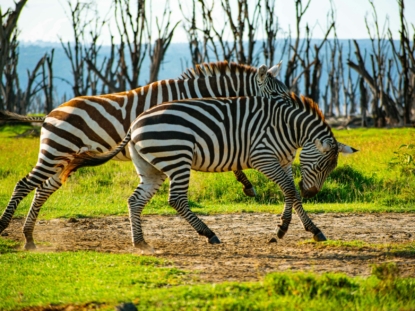
Marsabit’s dense forest holds a good range of wildlife, though the thick cover makes it challenging to spot, so sightings are earned. Alongside the elephants you may find buffalo, greater and lesser kudu, the endangered Grevy’s zebra, reticulated giraffe, and predators including lion and leopard that are present but seldom seen.
Smaller residents include caracal, aardwolf, Kirk’s dik-dik, olive baboon and colobus monkey. Game viewing here rewards patience rather than promising a checklist. The variety reflects the meeting of forest and desert. Sightings are never guaranteed. African Safari Trails sets honest expectations for the forest.
Bird Watching and the Cliffs
Bird watching is a real strength of Marsabit, with around 350 recorded species and a notable count of birds of prey. The cliffs above Lake Paradise hold Rüppell’s griffon vultures, peregrine falcons, mountain buzzards and African fish eagles, and the rare lammergeier has long been associated with the mountain.
The forest and lakes add weavers, turacos and waterbirds, and the park is also known for its butterflies. Birding pairs naturally with the crater lakes and forest drives. The raptors on the cliffs are a highlight. African Safari Trails can build a birding focus into a Marsabit trip.
Culture of the Northern Peoples
Marsabit is as much a cultural destination as a wildlife one, and cultural tours here run deep. The town and surrounding country are home to many distinct northern peoples, pastoralists and craftspeople including the Borana, Rendille, Gabbra, Turkana and Burji, each with their own traditions, dress and way of life in this harsh land.
The Marsabit cultural museum tells their story, and a visit gives real context to the region beyond its wildlife. The famous singing wells, where herders sing while watering their livestock, are a memorable sight nearby. The human story here is rich. African Safari Trails can arrange respectful cultural visits.
Crater lakes and forest
An extinct volcano of misty cloud forest with three crater lakes, including scenic Lake Paradise in its amphitheatre of cliffs.
Big-tusked elephants
A refuge for bull elephants with huge tusks, the home of the legendary Ahmed, drawn to the crater lakes and forest.
Forest wildlife and birds
Buffalo, greater kudu, Grevy’s zebra and reticulated giraffe, with 350-plus birds and cliff-nesting raptors above the lakes.
Northern cultures
The Borana, Rendille, Gabbra and other peoples, a cultural museum and the famous singing wells where herders water their stock.
Combining Marsabit on a Northern Trip
Marsabit works best as part of a far-northern expedition rather than a stand-alone visit, given the long road up. It sits on the route north towards Lake Turkana and the Ethiopian border, and makes a memorable stop for travellers heading that way.
It can also follow Samburu and the central highlands on a longer northern loop, often paired with the wilderness of Meru National Park to the south, a wild high point on a remote loop. The drive is long but the tarmac now reaches much of the way. The remoteness is the whole point. African Safari Trails builds it into a northern or Turkana expedition.
Best Time for a Marsabit Visit
The dry seasons are the best time for Marsabit, when wildlife gathers at the crater lakes and the long northern roads are passable. The long rains can wash out the tracks and are best avoided.
June to October (dry season)
The prime window, with wildlife drawn to the crater lakes, clearer forest and the best chance of good roads on the long drive north.
December to March (short dry season)
Warm and mostly dry, another good window for the crater lakes and forest before the long rains return to the north.
April to May, November (rains)
Green and misty but with torrential downpours that wash out the northern roads, so the long rains in particular are best avoided.
Treat it as an expedition, build in the culture, and set your expectations for forest viewing. Marsabit is a long way north, so plan it as part of a wider expedition rather than a quick visit, ideally with a sturdy vehicle and time to enjoy the crater lakes, the forest and the famous big tuskers without rushing. The thick cloud forest means game viewing is challenging and sightings are earned, so come for the scenery, the elephants and the solitude rather than a fast checklist, and walk only with an armed ranger since predators are present. Make time for the cultural museum and the singing wells, which give the region real depth. African Safari Trails plans the expedition end to end.
Getting There and Practicalities
Marsabit lies in the far north around 560 kilometres from Nairobi, reached by the tarmac A2 highway through Nanyuki and Isiolo, a long drive best broken over more than one day, or by light aircraft to the Marsabit airstrip near the main gate. The gates include Ahmed and Abdul near the park headquarters.
Entry is run by KWS on a cashless, prepaid basis through the eCitizen system, with fees by visitor category valid for 24 hours, and a 4×4 is sensible for the forest and the long approach. Flying in saves the long road north. African Safari Trails arranges the flights or drive, tickets and guide.
Marsabit National Park FAQ
How much does Marsabit National Park cost to enter?
Marsabit is a remote northern park with modest entry fees, with non-resident adults paying in the region of 25 to 30 US dollars per day and much lower rates for residents and citizens, charged per 24-hour stay. Fees are paid through the eCitizen portal. African Safari Trails includes the correct park fees in a clear, all-in quote and confirms the latest rates.
What is Marsabit National Park famous for?
Marsabit is best known as a forested mountain oasis in the northern desert, with three crater lakes including scenic Lake Paradise, and as a refuge for big-tusked bull elephants, most famously Ahmed, who was guarded by presidential decree. It is also rich in birds and northern cultures. African Safari Trails builds these into a trip.
Is Marsabit good for game viewing?
It is rewarding but challenging. The dense cloud forest hides wildlife, so sightings take patience, and the park is visited more for its scenery, crater lakes, big-tusked elephants and remoteness than for easy game drives. Predators are present but seldom seen. African Safari Trails sets honest expectations and builds the trip around the park’s real strengths.
How do you get to Marsabit?
Marsabit lies around 560 kilometres north of Nairobi on the tarmac A2 highway through Nanyuki and Isiolo, a long drive usually broken over more than a day, or reached by light aircraft to the nearby airstrip. A sturdy 4×4 suits the forest and the approach. African Safari Trails arranges the flights or drive and the logistics.
Can you visit Marsabit on its own?
It is possible but most rewarding as part of a wider northern expedition, given the long road up, often on the way to Lake Turkana or after Samburu and the highlands. Built into a larger loop, the remoteness becomes part of the appeal. African Safari Trails plans it within a northern itinerary.
When is the best time to visit Marsabit?
The dry seasons from June to October and December to March are best, with wildlife at the crater lakes and passable northern roads, while the long rains from April to May wash out the tracks and are best avoided. African Safari Trails times your expedition for the best conditions.
Plan Your Marsabit Trip with African Safari Trails
Planning the long road north, timing it for passable tracks and the crater lakes, finding the big-tusked elephants in the forest and weaving in the region’s culture all go more smoothly with someone who knows the far north, so a remote expedition runs safely and rewards you rather than turning into a hard, fruitless slog. Marsabit is one of the wilder entries among Kenya’s national parks, and folds into the broader range of Kenya safaris for those chasing the road less travelled. African Safari Trails has spent years building northern and Lake Turkana expeditions that take in Marsabit, with guides who know the mountain, the crater lakes and the northern roads by experience rather than a brochure. They will tell you straight what the park offers and how to combine it with the wider north, and handle the vehicle, tickets and logistics quietly in the background.
Want a proper quote, or just a steer on planning a northern expedition? Reach out to African Safari Trails and a real person gets back to you.