Meru National Park is a wild, uncrowded park east of Mount Kenya, a green country of thirteen rivers, doum palms and big-tusked elephants, famous as the home of Elsa the lioness from Born Free. African Safari Trails arranges Meru safaris and quiet bush trips off the main circuit. Big Five wildlife roams here, with rhino in a protected, fenced area.
Meru is one of Kenya’s best-kept secrets. While the crowds head for the Mara and Amboseli, this green, well-watered park on the eastern side of Mount Kenya stays gloriously quiet, threaded by thirteen rivers and palm-lined streams. It is where George and Joy Adamson raised and released Elsa, the lioness of Born Free, and it holds the full range of big game across some of Africa’s most varied country. African Safari Trails builds it into a safari for travellers who want wilderness without the vehicles.
Why Visit Meru National Park
Meru is for travellers who want a genuine wilderness with the place almost to themselves. Only a tiny fraction of safari-goers come here, so you can spend a whole game drive seeing more elephants than other vehicles, in country that feels untouched and wild.
It rewards that effort with huge variety, thirteen rivers, swamps, doum palms, savanna and bush, plus the full sweep of big game and the famous Born Free history. The dense cover means sightings are earned rather than handed over. The solitude is the point. African Safari Trails matches it to travellers who value quiet over crowds.
The Born Free Story
Meru is forever tied to Born Free. It was here that George and Joy Adamson raised the orphaned lioness Elsa and returned her to the wild, the story behind Joy’s best-selling book and the award-winning film that made the park famous in the 1960s.
Elsa died in the park in 1961 and her grave lies out near the Ura River on the standard circuit, with the lesser-known grave of Pippa the cheetah nearby. The conservation story runs deeper and darker than the film, but the legacy endures. The history adds real meaning to a visit. African Safari Trails brings the Adamson story to life through its guides.
There is a stillness to Meru you feel the moment you cross the Rojewero River. The air smells of wild sage and damp earth, the sound of running water is never far off, and the doum palms throw long shadows over the grass. You might find Elsa’s grave in a quiet clearing while a herd of elephants crosses the river two hundred metres downstream, and for a long while nobody in the vehicle says a word.
Wildlife and the Big Five
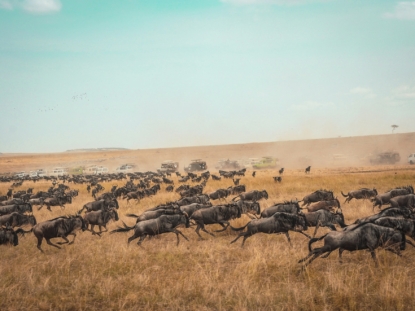
Meru holds the full Big Five, though the thick cover means you work for your sightings on a game drive. Elephants are plentiful, often in large herds, and the park’s lean, scarred lions, leaner and less maned than the Mara’s, are a real draw, with cheetah sightings reckoned to be improving and leopard present but elusive.
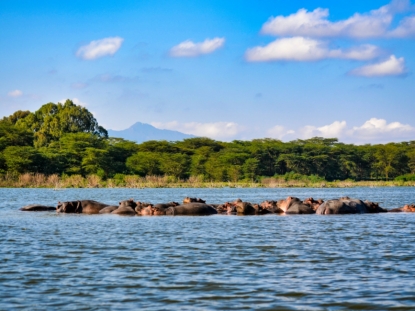
Some of the biggest buffalo herds in Kenya gather here, and the rivers hold hippo and crocodile. Sightings come to the patient and the well-guided. The variety across the habitats is exceptional. African Safari Trails pairs you with guides who read this dense country.
Northern Species and the Rivers
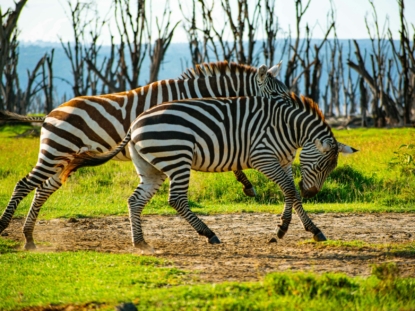
What sets Meru apart is its mix of southern and northern wildlife. Alongside the usual plains game you will find the dry-country specials of the north, reticulated giraffe, fine-striped Grevy’s zebra, dapper Beisa oryx, the long-necked gerenuk and the shy, beautifully marked lesser kudu.
The thirteen rivers, fed by Mount Kenya and the Nyambene Hills and flowing into the Tana, are the park’s lifeblood, lined with doum and raffia palms and drawing wildlife to their banks. The rivers shape the whole park. The northern species are a rare treat. African Safari Trails plans drives along the richest river country.
Rhino in the Protected Reserve
Meru holds both black and white rhino in a fenced, closely guarded reserve near the western side of the park, one of the country’s quieter places to see them. The area covers around fifty to eighty square kilometres and protects roughly seventy rhino under constant surveillance.
The reserve is a conservation success after poaching wiped out the park’s rhino in the 1980s, though it is big enough that finding them still takes a proper game drive. Sightings are good but never guaranteed. The recovery is a story worth knowing. African Safari Trails knows the rhino areas of the reserve.
Bird Watching and River Fishing
Bird watching is exceptional at Meru, with well over 300 species and some counts above 400 across its varied habitats. The rivers and swamps draw Pel’s fishing owl, Peter’s finfoot, kingfishers, bee-eaters and rollers, while the dry bush holds the Somali ostrich, golden-breasted starling and palm-nut vulture.
The Tana River also allows sport fishing for catfish, tilapia and the hard-fighting barbel with a KWS permit, a quiet pleasure on a palm-shaded bank. Birding and fishing both pair well with the game drives. The river life is a highlight. African Safari Trails can weave birding or fishing into a Meru trip.
Born Free history
The home of Elsa the lioness, with her grave and Pippa the cheetah’s nearby, the setting of Joy Adamson’s famous book and film.
Big Five in wild country
Elephant, lion, leopard, buffalo and rhino across thirteen rivers, swamps and bush, with sightings earned in the thick cover.
Northern specials
Reticulated giraffe, Grevy’s zebra, Beisa oryx, gerenuk and lesser kudu, dry-country species seldom seen on the main circuit.
Rivers and birdlife
Thirteen palm-lined rivers, Adamson’s Falls on the Tana, river fishing and over 300 bird species including Pel’s fishing owl.
Combining Meru on a Safari
Meru works well as the wild, quiet leg of a wider Kenya safari, sitting east of Mount Kenya within reach of the northern circuit. It pairs with Ol Pejeta, Samburu or a climb in Mount Kenya National Park, and rewards travellers willing to go a little off the beaten track, or a push further north to remote Marsabit National Park.
Most visitors give it two or three nights, enough for the rivers, the rhino reserve, Elsa’s grave and a full-day trip to Adamson’s Falls on the Tana. As a contrast to the busy parks it is hard to beat. The remoteness is the appeal. African Safari Trails builds it into a northern or off-circuit trip.
Best Time for a Meru Safari
The dry seasons are the best time for a Meru safari, when wildlife gathers at the rivers and swamps and the cover thins a little. The green season is verdant and superb for birds but harder for spotting game.
June to September (long dry season)
The prime window, with wildlife drawn to the rivers and permanent swamps, thinner bush and good road conditions across the park.
December to March (short dry season)
Warm, mostly dry and excellent for game viewing and the river country, a fine second window between the rains.
April to May, November (rains)
Green and quiet with the best birding and migrants, but tall grass, dense cover and muddy tracks make wildlife harder to find.
Give it a couple of nights, expect to earn your sightings, and make time for the rivers. Meru is a place to slow down rather than tick off animals, so allow two or three nights to settle into its pace, take in the rivers and swamps, the fenced rhino reserve and Elsa’s grave, and consider a full-day trip down to Adamson’s Falls on the Tana. The thick cover means game viewing takes patience, so a good guide makes all the difference, and the dry season from June to September gives the easiest spotting. Large roadless areas can only be explored on foot with an armed ranger, which is a quiet thrill in itself. African Safari Trails sets the pace and the plan.
Getting There and Practicalities
Meru lies east of Mount Kenya in Tharaka-Nithi and Meru counties, around 350 kilometres from Nairobi, a drive of roughly five to six hours via Nanyuki and Meru town, with the main Murera Gate plus the Bisanadi and Ura gates. Airstrips at Kinna and Mulika take light aircraft.
Entry is run by KWS on a cashless, prepaid basis through the eCitizen system, with fees by visitor category valid for 24 hours, and a 4×4 is sensible given the dense bush and river crossings. Flying in saves the long road north. African Safari Trails arranges the flights or drive, tickets and guide.
Meru National Park FAQ
How much does Meru National Park cost to enter?
Under the current KWS fees, non-resident adults pay in the region of 60 to 70 US dollars per day, with much lower rates for African citizens, East African citizens and Kenya residents, and reduced rates for children, charged per 24-hour stay. Vehicle and camping fees are extra. African Safari Trails includes the correct park fees in a clear, all-in quote.
What is Meru National Park famous for?
Meru is best known as the home of Elsa the lioness from Born Free, where George and Joy Adamson raised and released her, and for its thirteen rivers, big-tusked elephants, northern wildlife and quiet, uncrowded character. It also holds both black and white rhino in a fenced reserve. African Safari Trails builds these into a visit.
Can you see the Big Five in Meru?
Yes, all five are present, but the thick cover means sightings are earned rather than easy, especially for leopard. Elephants and buffalo are plentiful, the lean Meru lions are a draw, cheetah sightings are improving, and rhino live in a fenced reserve. A good guide makes the difference. African Safari Trails pairs you with guides who know the park.
Is Meru worth visiting given it is remote?
Very much so for the right traveller. Meru offers a genuine wilderness with very few other vehicles, huge habitat variety, the Born Free history and northern species seldom seen elsewhere, in exchange for a longer drive and harder-won sightings. It is ideal as a quiet contrast to the busy parks. African Safari Trails builds it into an off-circuit trip.
How many days do you need in Meru?
Two or three nights suits Meru well, enough to take in the rivers, the rhino reserve, Elsa’s grave and a full-day trip to Adamson’s Falls without rushing, while settling into the park’s slow, wild pace. Given the travel north, a single night feels too short. African Safari Trails sets the right length.
When is the best time to visit Meru?
The dry seasons from June to September and December to March are best, with wildlife drawn to the rivers and thinner cover for spotting, while the rains bring thick growth and fine birding but harder game viewing and muddy tracks. African Safari Trails times your safari for the best conditions.
Plan Your Meru Safari with African Safari Trails
Reading the dense river country, finding the rhino in the fenced reserve, visiting Elsa’s grave and giving the park the unhurried time it deserves all go more smoothly with someone who knows Meru, so you come away with a real sense of its wild solitude rather than a frustrating day of empty bush. Meru is one of the quieter gems among Kenya’s national parks, and slots neatly into the wider range of Kenya safaris. African Safari Trails has spent years building northern and off-circuit safaris that take in Meru, with guides who know the rivers, the rhino areas and the Born Free story by experience rather than a brochure. They will tell you straight what the park offers, how long to give it and how to pair it with Ol Pejeta, Samburu or Mount Kenya, and handle the tickets, transport and transfers quietly in the background.
Want a proper quote, or just a steer on planning an off-circuit trip? Reach out to African Safari Trails and a real person gets back to you.