Nairobi National Park is Kenya’s oldest park and the only national park inside a capital city, a 117-square-kilometre stretch of plains just south of Nairobi where rhinos, lions and giraffes roam against the city skyline. African Safari Trails arranges Nairobi National Park game drives and day trips, an easy first or last stop on a Kenya safari. Four of the Big Five live here, minus the elephant.
No other capital has anything like it. Just a few kilometres from Nairobi’s skyscrapers, lions hunt, black rhinos graze and giraffes browse the acacia, with the city towers shimmering on the horizon. Gazetted in 1946 as the first national park in Kenya and all of East Africa, this small but rich park is the perfect way to start or end a trip, a real game drive squeezed into half a day near the airport. African Safari Trails makes it an easy, well-timed stop.
Why Visit Nairobi National Park
Nairobi National Park earns its place for one simple reason: nowhere else can you watch wild rhino, lion and giraffe with a city skyline behind them. Just 7 to 10 kilometres from the central business district, it offers a genuine slice of the African plains within minutes of the city and the airport.
It is not the Maasai Mara, and you will not see vast herds or elephants, but for a half-day drive on arrival or before a flight home, it is hard to beat. The contrast of wild animals and towers is unique. It packs a lot into a small space. African Safari Trails uses it to bookend a wider Kenya trip.
Wildlife Watching and the Big Five
Wildlife watching in Nairobi National Park turns up four of the Big Five, lion, leopard, buffalo and rhino, with only the elephant missing, since the park is too small to hold them. The open plains and scattered woodland make for surprisingly good sightings close to the city.
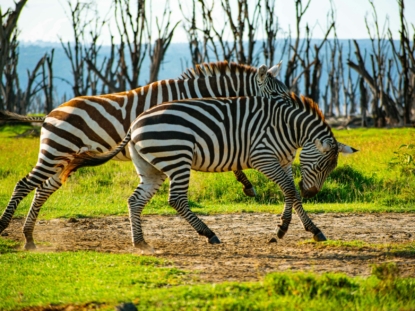
Lions are seen on perhaps two drives in three, with cheetah on the southern plains, the occasional leopard, and reliable giraffe, zebra, eland, buffalo, hyena and ostrich. Over a hundred mammal species live here, though all sightings depend on luck and timing. The variety is real. African Safari Trails pairs you with guides who know where the wildlife gathers.
Black Rhino: Nairobi’s Conservation Story
Nairobi National Park is one of Kenya’s most important refuges for the black rhino, and the single best reason many people visit. The park protects a healthy, closely guarded population of these endangered animals, with rangers patrolling against poaching, and it has long been central to Kenya’s rhino recovery.
Both black and white rhino can be seen here, often grazing the scrub a little off the track, so binoculars help. Spotting a rhino with the skyline behind it is the park’s signature image. Sightings are good but never guaranteed. African Safari Trails knows the areas where rhino are most often found.
There is a photograph you can only take in one place on earth: a black rhino grazing the open plains with the glass towers of a capital city catching the morning sun behind it. Nairobi National Park makes the surreal feel ordinary, lions on the grass, giraffes against the skyline, a whole working savannah pressed right up against eight million people.
Game Drives in Nairobi National Park
A game drive is the main way to experience the park, on a network of tracks across open grassland, acacia woodland, rocky gorges and riverine forest, with dams and a few permanent water points that draw wildlife. Drives run within the gates’ opening hours, with early morning the most rewarding.
Half-day drives are the norm, easily done from the city or even on a long airport layover through the East Gate near the airport. A guide with a radio network finds far more than a self-drive would. The park is compact enough to cover well in a morning. African Safari Trails arranges guided game drives and transfers.
The Mini-Migration and the Open Plains
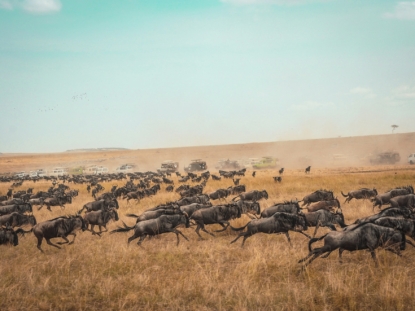
The park’s southern boundary is unfenced, opening onto the Athi-Kapiti plains, so wildlife moves freely in and out with the seasons. In the dry months, large numbers of wildebeest, zebra and other grazers move into the park, a little-known mini-migration that peaks around July and August.
This open corridor is what keeps the park ecologically alive, allowing the seasonal movement and breeding exchange that a fully fenced island would lose, though city growth threatens it. The plains feel genuinely wild despite the city. The dry-season influx boosts game viewing. African Safari Trails times visits for the best of the plains.
Bird Watching in Nairobi National Park
Bird watching is a real strength here, with over 400 species recorded in the park’s mix of grassland, forest, wetland and dams, including around twenty seasonal European migrants. It is a fine spot to start a Kenya bird list close to the city.
The dams and wetlands draw herons, crowned cranes, pelicans and waterbirds, while the grasslands hold bustards, secretarybirds and raptors, and the forest pockets add their own species. The green months from November bring the migrants. Birding pairs naturally with the game viewing. African Safari Trails can build a birding focus into a park visit.
The Sheldrick Orphanage and Safari Walk
Right by the park’s main gate sit two of Nairobi’s best-loved wildlife stops. The David Sheldrick elephant orphanage, opened in 1963, hand-rears orphaned elephant and rhino calves before returning them to the wild, with a short daily public viewing that is a moving conservation experience rather than a zoo.
The Nairobi Safari Walk, a raised boardwalk through recreated habitats, and the neighbouring Animal Orphanage offer accessible, family-friendly wildlife viewing on foot. The nearby Giraffe Centre adds another. These pair perfectly with a morning game drive. African Safari Trails can fold the orphanage and Safari Walk into your day.
Black and white rhino
One of Kenya’s key rhino refuges, with a closely guarded population grazing the plains, often photographed against the city skyline.
Four of the Big Five
Lion, leopard, buffalo and rhino, plus cheetah, giraffe, zebra, eland and ostrich, all within minutes of the city. No elephants.
Over 400 birds
Grassland, forest, wetland and dam species, with around twenty European migrants arriving in the green months from November.
Sheldrick Orphanage and Safari Walk
An elephant orphanage, the raised Safari Walk and the Giraffe Centre near the gate, easy add-ons to a morning drive.
Fitting the Park into a Kenya Safari
Nairobi National Park works best as the bookend of a wider Kenya safari, a half-day drive on the day you land or before you fly home, making use of time that would otherwise be spent in transit. Its closeness to the airport is the whole point.
A common plan is a morning at the park or the elephant orphanage on arrival, then onward to the Mara, Amboseli or Tsavo, or a final drive before an evening departure. It sets the tone without eating into the main safari. The logistics are simple. African Safari Trails slots it neatly around your flights and main parks.
Best Time for a Nairobi Park Safari
The park is open year-round, but the dry season is the easiest time for a Nairobi park safari, when thinner grass and gathered wildlife make for better viewing. The green months bring birds and green plains but tougher game spotting.
June to October (dry season)
The best for game viewing, with short grass, wildlife at water and the dry-season mini-migration of wildebeest and zebra into the park.
December to February (short dry spell)
Warm, generally clear and good for wildlife and birds, a fine window between the rains for a half-day drive.
March to May, November (rains)
Green and quiet, with the bird migrants present, though tall grass and wet tracks make wildlife harder to spot.
Treat it as a half-day bookend, go early, and pre-pay your entry online. Nairobi National Park is at its best as the start or end of a Kenya trip, ideally an early-morning drive when the animals are active and the city haze is low, paired with the Sheldrick elephant orphanage or the Safari Walk near the gate. The park is cashless, so pay your KWS entry through the eCitizen or KWS Pay portal before you arrive, carry the ID matching your visitor category, and bring binoculars, as the rhinos often stay well off the track. Pick the East Gate if you are coming straight from the airport. African Safari Trails handles the timing and tickets.
Getting There and Practicalities
The park lies on Lang’ata Road about 7 to 10 kilometres from the city centre, with the main gate there, plus the KWS headquarters gate, the East Gate near Jomo Kenyatta International Airport and the quieter Cheetah Gate on Magadi Road. Gates open early and close in the evening.
Entry is cashless, paid in advance through the KWS eCitizen system, with fees set by visitor category, and the park is plastic-free with a speed limit and stay-in-vehicle rules. A guided trip removes all the admin. It is the most accessible of the Kenya national parks, and slots neatly onto a longer itinerary such as the 3 Days Kenya Safari Masai Mara. African Safari Trails arranges the tickets, vehicle and guide.
Nairobi National Park FAQ
How much does Nairobi National Park cost to enter?
KWS charges by visitor category, with non-resident adults paying around 80 US dollars per day, African citizens about 40 dollars, East African citizens roughly 1,000 Kenyan shillings and Kenya residents about 1,350 shillings, plus a small gateway fee, with reduced rates for children. A combined Nairobi Package adding the Safari Walk and Animal Orphanage costs more. African Safari Trails includes entry in a clear, all-in quote.
Can you see the Big Five in Nairobi National Park?
You can see four of the five, lion, leopard, buffalo and rhino, but not the elephant, as the park is too small to hold them. Black and white rhino are a particular highlight, and lions are seen on most drives, though all sightings depend on luck. African Safari Trails knows where the wildlife tends to gather.
How long do you need at Nairobi National Park?
A half-day game drive of three to four hours covers the park well, since it is compact, which makes it ideal on the day you arrive or before a flight home. Adding the elephant orphanage or Safari Walk turns it into a full, easy day. African Safari Trails times it around your flights.
Is Nairobi National Park worth visiting?
For a half day, very much so. You will likely see rhino and possibly lion within minutes of the city, with the unique skyline backdrop, though it is not a substitute for the Mara or Amboseli. As a first or last stop it is hard to beat. African Safari Trails uses it to bookend a wider trip.
When is the best time to visit?
The dry season from June to October is best, with short grass, gathered wildlife and the mini-migration into the park, while the green months from November and the long rains bring birds but harder game spotting. The park is open year-round. African Safari Trails times your visit for the best viewing.
How do you get to the park and pay?
The park sits on Lang’ata Road minutes from the city and airport, with several gates including the East Gate by the airport. Entry is cashless, prepaid through the KWS eCitizen portal, with the ID matching your category needed at the gate. African Safari Trails arranges the tickets, vehicle and guide.
Plan Your Nairobi National Park Visit with African Safari Trails
Timing a drive for the best light and wildlife, sorting the cashless tickets, and slotting the park neatly around your flights and main safari all go more smoothly with someone who knows how Nairobi National Park fits a Kenya trip, so it adds a real game drive rather than a rushed detour. African Safari Trails has spent years building Kenya safaris that open or close here, with guides who know where the rhino graze and the lions rest by instinct rather than a brochure. They will tell you straight what to expect from a half day and how to pair it with the orphanage, and handle the tickets, vehicle and transfers quietly in the background.
Want a proper quote, or just a steer on fitting the park into your trip? Reach out to African Safari Trails and a real person gets back to you.