Kidepo Valley National Park is Uganda’s most remote and its most rewarding safari park, a semi arid wilderness in the far northeast where game drives turn up lions, cheetah, elephant, buffalo and animals found in no other Ugandan park. African Safari Trails runs guided Kidepo safaris, handling the long road or the flight, the park fees and the ranger guides. It sits in the Karamoja region on the South Sudan and Kenya borders, built around the wildlife rich Narus Valley.
The numbers tell the story of how few people get here. Kidepo averages a tiny fraction of the visitors that pour into the southern parks, so a game drive can run for hours with nothing but distant mountains and your own vehicle. The park was set aside as a game reserve in 1958 and made a national park in 1962, covering roughly 1,440 square kilometres of open savanna framed by the Morungole range. African Safari Trails builds the long trip up here for travellers who want wildlife without the crowds.
Big Game Drive Safari in the Narus Valley
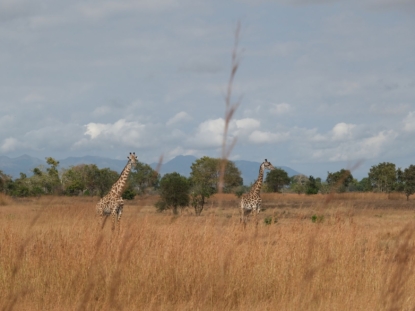
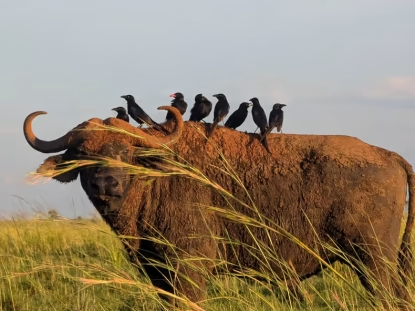
The game drive safari in the Narus Valley is the centre of any Kidepo trip. This southern valley around Apoka holds the only permanent water in the park, so wildlife gathers here through the dry months, and two roughly twenty kilometre circuits cover the most productive ground. Big buffalo herds, elephant, Rothschild’s giraffe, zebra, hartebeest and waterbuck spread across the plains, with lions never far behind.
Kidepo is among the most reliable places in East Africa for cheetah on the open short grass, and the lions here sometimes rest up in the sausage trees or on the rocks near the Apoka headquarters. Morning and late afternoon are the productive windows, when the cats move and the light suits a camera. African Safari Trails sends a four wheel drive with a ranger who reads the valley and knows where the prides have been working.
Narus Valley
The southern heart of the park, with year round water at Apoka. The highest wildlife numbers, the main game drive circuits and the best chance of lion and cheetah.
Kidepo Valley
The drier northern valley, a wide sand river for much of the year. Lower wildlife density but a wild emptiness, good for ostrich and the Kanangorok hot springs.
Found only here
Cheetah, ostrich, bat eared fox, caracal and greater kudu live in Kidepo and nowhere else in Uganda, a species list closer to northern Kenya than the southern parks.
Big game
Four of the big five roam the park, with lion, leopard, elephant and buffalo all present. A white rhino reintroduction has begun to fill in the fifth.
Game Drive Safari into the Remote Kidepo Valley
A game drive safari into the northern Kidepo Valley trades wildlife numbers for raw country. The Kidepo River runs dry for most of the year, leaving a broad band of white sand, and the drive crosses open plains hemmed by mountains on the South Sudan border. Wildlife is thinner here, but this is the best part of the park for ostrich and secretary bird, and greater kudu hide in the thicker bush.
The drive usually aims for the Kanangorok hot springs, about thirty kilometres north of Apoka near the frontier, where you can sit beside the warm water with the ranges stretching away. It is a long, slow outing best kept for travellers with a few days to spare. African Safari Trails arranges it as a full day with a packed lunch.
Guided Walking Safari Across the Narus Plains
A guided walking safari puts you on the ground in a way the southern parks rarely allow. From the Apoka tourism centre an armed ranger leads a roughly five kilometre loop through the Narus grasslands, taking two to three hours and showing the smaller wildlife, the tracks and the plants that a vehicle drives straight past. The open country and the mountain backdrop make it one of the most scenic walks in Uganda.
Because this is genuine wilderness with predators about, the ranger sets the pace and the rules, and you stay together. African Safari Trails books the walk and the escort through the park office.
Mountain Hiking Safari up Morungole and the Lamoj Hills
A mountain hiking safari takes you above the plains into the ranges that wall the park. The shorter Lamoj hills sit just a few kilometres from the headquarters and make a half day climb with long views back over the savanna. The bigger objective is Mount Morungole, which rises to about 2,750 metres near the three way border, a full and demanding day on foot.
The Morungole climb also leads toward the homeland of the Ik people, so a hike here often doubles as a cultural visit. African Safari Trails arranges a ranger and, where the route calls for it, a local guide.
Karamojong Cultural Tour and Manyatta Visit
The Karamojong cultural tour is one of the strongest in Uganda, because the way of life here has changed less than almost anywhere else. The Karamojong are cattle herding pastoralists, often likened to the Maasai across the border, and a visit to a manyatta, their fenced cluster of homes, opens up daily life around livestock, the dances and the customs the community still keeps.
The visit goes through the community, so an indigenous guide leads it and the money stays local. African Safari Trails sets this up through the park and the village so it is welcomed rather than intrusive.
Ik People Cultural Trail on Mount Morungole
The Ik cultural trail reaches one of Uganda’s smallest ethnic groups, a community of a few thousand living high in the Morungole Mountains with a language their neighbours do not share. Getting there means a stiff hike up the range, which is why the visit pairs with the Morungole climb, and the reward is time with elders, a look at subsistence farming on steep ground and a culture that has held its shape in isolation.
It is a long day and needs reasonable fitness. African Safari Trails arranges the guide and the timing so the climb and the visit fit one day.
Bird Watching Safari for Dry Country Species
A bird watching safari in Kidepo turns up close to 476 recorded species, second only to Queen Elizabeth among Uganda’s parks, and the list is unlike anywhere else in the country. More than a hundred are dry country birds of the northern frontier, including several that birders cannot find in the southern parks.
The ostrich is the headline, the only place in Uganda to see wild ones, alongside the kori bustard, the secretary bird, the Abyssinian ground hornbill and the localised Karamoja apalis and Clapperton’s francolin. Kidepo is also strong on raptors. The Narus and Namamukweny valley fringes are the productive routes, and African Safari Trails can put a birding guide in the vehicle.
Best Time for a Kidepo Safari
Kidepo is semi arid, so it runs a longer rainy spell and a sharp dry season, and the dry months pull wildlife tight around the Narus water. The wetter months green the plains and bring birds, at the cost of softer roads on the remote tracks.
December to March
The driest, hottest stretch and the best for game viewing. Animals crowd the Narus water holes, and cheetah hunt the short grass. Days can be very hot.
June to September
Generally good for wildlife and access, with firmer roads. A reliable window for a first Kidepo trip and the long drive up.
April, May and November
Wetter, greener and quieter. Birding is at its best as the country fills out, but some remote tracks turn soft and slow.
Give Kidepo the time it deserves, or fly. The drive from Kampala runs nine to ten hours, so a rushed two day trip spends most of itself in the car. Either build in three or more days on the ground, or take the flight to Apoka and save the road for the wildlife. African Safari Trails maps both options against your budget.
Getting to Kidepo Valley National Park
By road, Kidepo is the longest haul in Uganda, roughly 570 to 800 kilometres from Kampala depending on the route, around nine to ten hours through Gulu and Kitgum. Most travellers break the drive with a night in Gulu or at the Ziwa rhino sanctuary on the way, which also adds rhino tracking to the trip.
Flying is the comfortable answer. Scheduled and charter flights run from Entebbe or Kajjansi to the Apoka airstrip inside the park, turning two days of driving into a short hop, with a vehicle waiting at the strip. African Safari Trails arranges the flights and the ground transfer, and can pair Kidepo with Murchison Falls on a northern loop. As the most remote of Uganda’s national parks, it anchors a distinctive Uganda safari for those willing to go the distance.
Kidepo Valley Safari FAQ
How much is park entry and a game drive in Kidepo?
Park entry currently runs at about 40 US dollars for foreign non residents, 30 dollars for foreign residents and around 20,000 Uganda shillings for East African citizens, valid for 24 hours. A guided game drive carries a fee of roughly 30 dollars, and the park requires an armed ranger on drives and walks for a small additional charge. African Safari Trails folds these into the trip price and confirms current rates, since the wildlife authority reviews them from time to time.
Is Kidepo worth the long trip?
For travellers who value wilderness and want wildlife without the vehicle crowds, yes. Kidepo offers some of the most scenic game viewing in Uganda, reliable cheetah, big herds in the Narus Valley and species seen nowhere else in the country. The trade off is the distance and the cost of getting there. It rewards a few unhurried days rather than a quick look.
How many days do I need at Kidepo?
Three days on the ground is the sensible minimum, which lets you drive the Narus circuits, reach the northern Kidepo Valley and add a walk or a cultural visit. If you are driving rather than flying, add the travel days on top. African Safari Trails shapes the itinerary around whether you fly or drive and what you most want to do.
Will I see lions and cheetah?
Lions are commonly seen around Apoka and the Narus Valley, and Kidepo is one of the better places in East Africa for cheetah on the open plains, though neither is ever guaranteed. The dry months, when wildlife concentrates near water, give the strongest odds. A guide who knows the current movements makes a real difference here, given how large and empty the park is.
Is Kidepo safe to visit?
Yes. The Karamoja region was unsettled in the past, but the park is calm and well managed today, with armed rangers accompanying drives and walks as standard practice in true wilderness. African Safari Trails monitors conditions and keeps to the park’s safety guidance, and the lodges and routes used are well established.
Can I combine Kidepo with other parks?
The natural pairing is with Murchison Falls on a northern loop, often with a stop at the Ziwa rhino sanctuary for rhino tracking on the way. Some longer trips link Kidepo through to the western parks, but the distances are large, so flying one leg usually makes sense. African Safari Trails plans the loop so the long drives are broken sensibly.
Plan Your Kidepo Safari with African Safari Trails
Kidepo takes more planning than the southern parks, between the distance, the choice of road or flight and the remote camps, and that is exactly where help pays off. African Safari Trails has spent years running trips into this corner of Uganda, with guides who know the Narus circuits, where the cheetah hunt and how to time the long drive or the flight. They will tell you plainly what the park gives and what it asks, and the fees, rangers and transfers are handled quietly in the background.
Want a proper quote, or just a steer on whether to drive or fly? Reach out to African Safari Trails and a real person gets back to you.