Bird watching in Uganda is among the finest in Africa, with well over a thousand species packed into a country the size of Britain, from the shoebill in the swamps to the Albertine Rift endemics of the western forests. African Safari Trails runs guided birding safaris to the top sites, Mabamba, Bwindi, Queen Elizabeth, Semuliki and more, with specialist guides who find birds by call. Forest, wetland, savanna and mountain in one small country make the birding rich, and Uganda anchors any wider East Africa birding trip.
Few places offer this much variety in so little ground. Uganda’s bird list runs to more than a thousand species, close to half of all the birds in Africa, because the country sits where the rainforests of the Congo meet the savannas of East Africa, with the bird rich Albertine Rift along its western edge. That means you can chase the prehistoric shoebill in a papyrus swamp one day and rare montane endemics in a misty forest the next. African Safari Trails plans the route and supplies the guides who know the calls.
What Makes Uganda a Top Bird Watching Safari
A bird watching safari in Uganda rewards both first timers and serious listers, because the range of habitats stacks so many species into a compact circuit. The country holds twenty four of the twenty five Albertine Rift endemics, birds found only along this stretch of the rift, plus the Fox’s weaver, the only bird found nowhere but Uganda.
The forests hold colourful turacos, broadbills, pittas and sunbirds, the wetlands the shoebill and papyrus specialists, the savannas the bustards, rollers and raptors, and the lakes huge gatherings of waterbirds and migrants. A good local guide is the difference between a handful of sightings and a long list, since most forest birds are heard first. African Safari Trails sends guides who bird by ear.
Shoebill Bird Watching at Mabamba Swamp
A shoebill bird watching safari at Mabamba Swamp is the easiest of all the great sightings, a papyrus wetland on Lake Victoria barely an hour from Entebbe. A guided canoe winds through the papyrus channels in search of the shoebill, the huge, still, shoe billed swamp bird that tops nearly every birder’s list, and Mabamba is the most reliable place in Uganda to find it.
The wetland also holds the papyrus gonolek, African pygmy goose, lesser jacana, swamp flycatcher and flocks of migrants from late in the year. Its closeness to the airport makes it a perfect first or last morning of a trip. African Safari Trails arranges the canoe, the guide and the early start that gives the best odds.
Mabamba Swamp
The shoebill site, an hour from Entebbe by road then canoe. The single most reliable place in Uganda for the bird, plus papyrus specialists and migrants.
Bwindi
The top forest birding, around 350 species and most of the Albertine Rift endemics, including the rare African green broadbill at Mubwindi Swamp.
Queen Elizabeth
The highest count in Uganda, well over 600 species across plains, wetlands and the Kazinga Channel, easy to combine with game drives.
Semuliki
The Congo birds, around 440 species in lowland forest, dozens found nowhere else in East Africa. A treasure for serious listers.
Forest Bird Watching Safari in Bwindi
A forest bird watching safari in Bwindi Impenetrable National Park is the prize for endemic hunters, since this ancient montane forest holds around 350 species and most of the Albertine Rift endemics, more than anywhere else in Uganda. The Buhoma trails and especially the walk down to Mubwindi Swamp in the Ruhija sector are the productive routes.
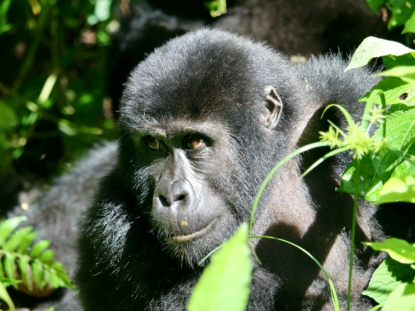
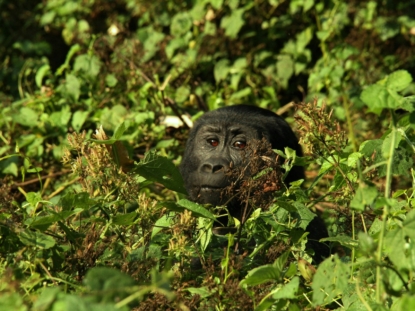
Mubwindi is where the most coveted bird lives, the rare African green broadbill, known from only a couple of sites on earth, alongside jewels like the regal and blue headed sunbirds, Shelley’s crimsonwing and the handsome francolin. The same forest, of course, holds the mountain gorillas. African Safari Trails can pair days of birding with gorilla trekking.
Savanna and Water Bird Watching in Queen Elizabeth and Murchison
A bird watching safari in the savanna parks adds the open country and water species, and Queen Elizabeth National Park leads with the highest list in Uganda, well over six hundred, thanks to its plains, crater lakes, forest and the Kazinga Channel. A boat cruise there is a birding trip in itself, with fish eagles, skimmers, pelicans and kingfishers along the banks.
Murchison Falls adds a riverine and savanna list of several hundred, from the Abyssinian ground hornbill and red throated bee eater to the shoebill on the delta and the rock pratincole below the falls. African Safari Trails folds the birding into the game drives and cruises so you get both.
Congo Forest Bird Watching in Semuliki
A bird watching safari in Semuliki National Park is the one for the true lister, Uganda’s only lowland tropical rainforest and an eastern arm of the Congo’s Ituri Forest. Its roughly 440 species include dozens of Guinea Congo birds found in no other part of East Africa, which is what draws birders the long way west.
The Sempaya area and the Kirumia trail are the productive routes, turning up the Nkulengu rail, the Congo serpent eagle, the long tailed hawk and a clutch of hornbills. Most are heard before seen in the dense forest, so a specialist guide matters here more than anywhere. African Safari Trails arranges a birding guide who knows the Congo species.
More Birding Sites Across Uganda
Beyond the headline parks, Uganda’s birding spreads across many habitats. Kibale and the neighbouring Bigodi wetland are the place for the green breasted pitta, the great blue turaco and the African grey parrot. Kidepo’s dry north holds the ostrich, the Karamoja apalis and the Abyssinian roller, while Lake Mburo’s acacia country has the red faced barbet and the African finfoot.
The high forests of Mgahinga, Rwenzori and the little Echuya reserve add more Albertine endemics, and the Lake Opeta wetlands near Pian Upe are the home of the Fox’s weaver. Even the Ziwa rhino tracking site and Lutembe Bay near Entebbe reward a birder. African Safari Trails strings the right sites into a birding circuit.
Best Time for Bird Watching in Uganda
Birding is good all year thanks to the equatorial climate, but the timing changes the experience. The dry months keep the trails easy and coincide with breeding, when many birds are in bright plumage and calling, while the wetter months bring abundant food and the Palearctic migrants.
December to February
A dry window with easy trails and breeding birds in fine plumage, overlapping the migrant season, so resident and visiting species are both about.
June to September
The other dry season, with accessible forest trails and good all round birding across the parks and wetlands.
November to April
The window for Palearctic migrants, when wetlands like Mabamba and Lutembe fill with visiting waders and waterfowl, traded for wetter, muddier trails.
Hire a specialist birding guide. In forest especially, the difference between a casual walk and a serious list comes down to a guide who knows the calls, since most forest birds are heard long before they are seen. A good guide also knows the exact spots where prized species like the green breasted pitta or the African green broadbill tend to show. African Safari Trails uses dedicated birding guides, not general safari drivers, for birding trips.
Planning Your Bird Watching Safari
A birding trip can be a focused species hunt or a relaxed add on to a wider safari. A short trip might pair a Mabamba shoebill morning with a few days in one forest, while a dedicated birding circuit of one to two weeks can string together Mabamba, Bwindi, Queen Elizabeth, Semuliki and the savanna parks for a very long list. Most sites sit inside national parks, so entry fees apply.
Bringing a good field guide and, above all, a specialist local guide makes the trip, and the compact geography means you can cover forest, wetland and savanna in a single loop, with birding sitting among the wider things to do in Uganda on a Uganda safari. African Safari Trails plans the route, the sites and the guides around your target species and your time.
Bird Watching in Uganda FAQ
How much does a birding safari cost in Uganda?
The main costs are park entry, roughly 35 to 45 US dollars per person per park per day for foreign non residents, a specialist birding guide fee, and at Mabamba the canoe and community guide, around 30 to 40 dollars. A dedicated birding circuit is priced as a multi day package covering guide, transport, park fees and accommodation. African Safari Trails gives one clear figure for the route and the guiding you choose.
How many bird species can I see in Uganda?
Uganda’s full list runs to more than a thousand species, close to half of all the birds in Africa. On a well planned one to two week birding circuit covering forest, wetland and savanna, keen birders with a good guide commonly record several hundred species, including many Albertine Rift endemics. A short trip focused on a couple of sites still turns up a strong list. African Safari Trails plans the route to maximise your count.
Where is the best place to see the shoebill?
The Mabamba Swamp on Lake Victoria, about an hour from Entebbe, is the most reliable place in Uganda to find the shoebill, reached by canoe through the papyrus. The Murchison Falls delta and the Lake Albert boats near Semuliki are other good spots. No sighting is ever guaranteed, since the bird is still and well hidden, but Mabamba gives the best odds. African Safari Trails arranges the canoe and the early start.
What are the Albertine Rift endemics?
They are birds found only along the Albertine Rift, the western arm of the rift valley that runs down Uganda’s border. Uganda holds twenty four of the twenty five, more than any other country, with Bwindi the richest site for them. Prized examples include the African green broadbill, Shelley’s crimsonwing, the regal sunbird and the Rwenzori turaco. African Safari Trails plans forest routes around the ones you most want.
Do I need a specialist birding guide?
For serious birding, yes. A dedicated bird guide identifies species by call, knows the exact spots where prized birds appear, and will turn a modest list into a long one, especially in dense forest where most birds are heard before seen. A general safari driver guide is fine for casual birding alongside game viewing, but not for a focused trip. African Safari Trails uses specialist birding guides for birding safaris.
Can I combine birding with gorillas and wildlife?
Easily, and many people do. Bwindi offers world class forest birding and the mountain gorillas in the same park, Queen Elizabeth pairs a huge bird list with classic game drives, and Murchison combines savanna birding with big game and the Nile cruise. The compact geography lets one loop cover birds, primates and wildlife. African Safari Trails builds a mixed trip that keeps the birders and the rest of the party happy.
Plan Your Uganda Birding Safari with African Safari Trails
Building a birding route, choosing the sites for your target species and lining up the right guides all go better with someone who knows where the birds are, so you do not waste days in the wrong habitat. African Safari Trails has spent years arranging birding trips from the Mabamba shoebill to the Bwindi endemics and the Congo species of Semuliki, with specialist guides who bird by ear. They will plan the loop around the species you most want, and the permits, entry and logistics are handled quietly in the background.
Want a proper quote, or just a steer on where to chase your target birds? Reach out to African Safari Trails and a real person gets back to you.