Semuliki National Park is Uganda’s only true lowland tropical rainforest and its finest forest birding destination, an eastern arm of the Congo’s Ituri Forest known for the Sempaya hot springs and Central African wildlife. African Safari Trails runs guided Semuliki safaris covering the hot springs, forest birding, primate trails and a Batwa visit, with permits and guides arranged. The park sits in western Uganda’s Bundibugyo district below the Rwenzori, with the Semuliki River marking the DR Congo border.
Stepping into Semuliki feels less like the rest of Uganda and more like the Congo Basin, because that is what it is, the easternmost reach of the great Ituri Forest. West African oil palms shade the trails, the broad Semuliki River runs like a small Congo, and the wildlife and birds belong to Central Africa. The park was gazetted in 1993 and covers about 220 square kilometres of dense, flat lowland forest, a sharp contrast to the Rwenzori peaks next door. African Safari Trails runs trips here mainly for the birds, the hot springs and the sense of somewhere genuinely off the circuit.
Sempaya Hot Springs Tour and Nature Walk
The Sempaya hot springs tour is the park’s signature outing, a guided forest walk to a pair of geothermal springs the local Bamaga clan call the male and the female. The female spring, Nyasimbi, is a geyser that spouts boiling water a couple of metres into the air and reaches around a hundred degrees, hot enough that guides boil eggs and plantains in it. The larger male spring, Bintente, sits deeper in the forest, about an hour’s walk through palms and swamp boardwalk.
The springs are a window on the forces that have shaped the rift valley over millions of years, and the local clans hold them sacred, performing rituals at the water. The walk in is itself good for primates and birds. African Safari Trails arranges the guided walk to both springs.
A geyser spouting boiling water in the middle of a lowland rainforest, with the steam rising through the oil palms, is not a sight most travellers expect to find in Uganda. Sempaya is the reason many come.
Forest Bird Watching Safari at Sempaya and Ntandi
A forest bird watching safari is the deepest reason birders make the long trip to Semuliki, which records around 441 species, roughly forty percent of Uganda’s entire list and two thirds of its forest birds. Many are Guinea Congo species found in no other part of East Africa, which is what pulls serious birders here.
The Sempaya and Ntandi areas give close views of the hornbills the park is known for, the white crested, piping and red billed dwarf hornbills, alongside the great blue and Ross’s turacos, the yellow throated nicator and the Nkulengu rail. African Safari Trails puts a specialist birding guide on the trail, since in this dense forest most birds are heard well before they are seen.
Primate Tracking Safari and the Red Monkey Trail
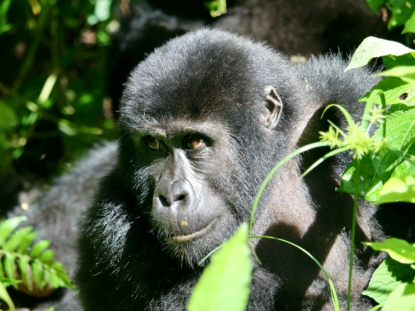
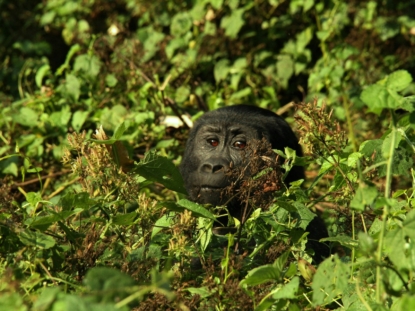
A primate tracking safari in Semuliki turns up eight species in the lowland forest, a Central African cast that differs from Uganda’s other parks. The grey cheeked mangabey, black and white colobus, Central African red colobus, blue monkey, red tailed monkey and olive baboon all move through the canopy, with chimpanzees present too.
The eleven kilometre Red Monkey Trail along the eastern boundary is the route for the rare De Brazza’s monkey, which has a stronghold here, ending at the Semuliki River. After dark the forest belongs to the nocturnal pottos and bushbabies. African Safari Trails arranges the primate walk and the guide.
Forest Nature Walk Safari Along the Kirumia Trail
A forest nature walk safari on the Kirumia Trail is the long immersion in the rainforest, a thirteen kilometre route that runs through the heart of the forest to the Semuliki River and back, an eight hour round trip starting early in the morning. It is rated among the best forest walks in Uganda for birds and for the feel of true Ituri forest.
The shorter Sempaya nature trail, around eight kilometres, gives a gentler taste of the same forest with the hot springs at the end. African Safari Trails matches the trail to your stamina and your interest in birds.
Shoebill Boat Safari on Lake Albert
A shoebill boat safari heads out onto Lake Albert, just north of the park, in search of one of Africa’s most sought after birds. The prehistoric looking shoebill stalks the shallows and the papyrus, and this corner of the lake is among the more reliable places in Uganda to find it at close range, along with a long list of other water birds.
The boat goes from the Ntoroko fishing village area, and sightings, while good here, are never promised, since the bird stands still and hides in the reeds. African Safari Trails books the boat and times it for the calm early light.
Batwa Cultural Tour at Ntandi
A Batwa cultural tour at Ntandi brings you to the forest people who came from the Ituri and lived in Semuliki as hunter gatherers before the park was created. Batwa guides share how they used the forest for food, shelter, medicine and tools, and at Ntandi the community performs music and dance, with handmade crafts for sale.
Tourism gives the Batwa an income as their old forest life fades, so the visit supports them directly. The wider valley is also home to the Bakonjo, Bwamba and Batuku peoples, each with its own way of life. African Safari Trails arranges the visit through the community.
Game Drive and Chimpanzee Tracking Safari in Toro-Semliki
A game drive and chimpanzee tracking safari in the neighbouring Toro-Semliki Wildlife Reserve adds savanna and primates to a forest trip, and it is worth knowing this is a separate protected area from the national park, sharing the valley. Three tracks cross its grassland, where forest and savanna elephants, buffalo, waterbuck, Uganda kob, crocodile and the occasional leopard are seen, and morning, afternoon and night drives are all on offer.
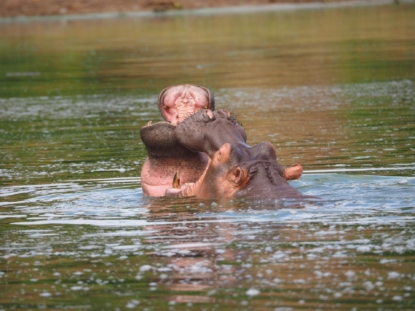
A habituated chimpanzee group in the reserve can be tracked on foot through the riverine forest, adding chimpanzee tracking to a forest trip, and the rare pygmy hippo is an outside chance along the water. African Safari Trails can combine the reserve’s game drives and chimps with the national park’s forest and hot springs in one trip.
Best Time for a Semuliki Safari
Semuliki is a wet forest by nature, so it sees rain in most months, but the drier stretches make the trails less muddy and the long forest walks more comfortable. The wetter months feed the birds and the forest, at the cost of heavier going underfoot.
June to August
A drier window, the most comfortable for the long forest trails and the hot springs walk. A good time for the Kirumia birding trek.
December to February
The other drier spell, warm and lowland humid, with firmer trails through the forest and good birding throughout.
March to May and the wetter months
Heavier rain and muddier trails in an already wet forest, though the birding stays rich and the forest is at its greenest.
Know the park from the reserve. The Semuliki National Park is the lowland forest with the hot springs and the birding, while the Toro-Semliki Wildlife Reserve next door is the savanna with game drives and chimpanzee tracking. They are two different places in the same valley, and African Safari Trails plans a trip that covers both so you are not surprised by which activity sits where.
Getting to Semuliki National Park
The park lies in the Bundibugyo district of western Uganda, about sixty kilometres beyond Fort Portal over the Rwenzori foothills, roughly two hours on the Fort Portal to Bundibugyo road. From Kampala the full drive runs around six hours, often broken at Fort Portal, which also serves Kibale’s chimps close by.
Flying is possible, with charter flights from Entebbe or Kajjansi to the Semuliki or Kasese airstrips and a road transfer on. The park combines naturally with Kibale and Queen Elizabeth on a western loop. African Safari Trails arranges the road or air legs and links Semuliki to the nearby parks; see more Uganda national parks or browse our full range of Uganda safaris.
Semuliki National Park Safari FAQ
How much is park entry and the activities at Semuliki?
Park entry currently runs at about 35 US dollars for foreign non residents, with lower rates for foreign residents and East African citizens. A Batwa cultural visit is around 10 dollars, and a boat trip on Lake Albert to look for the shoebill is roughly 100 dollars for the boat. Guided nature walks and birding walks carry their own fees with the ranger. African Safari Trails folds these into the trip price and confirms current rates.
What makes Semuliki special?
It is Uganda’s only genuine lowland tropical rainforest, an eastern finger of the Congo’s Ituri Forest, so it holds Central African birds, primates and trees you cannot find elsewhere in East Africa. Add the boiling Sempaya hot springs and a Batwa community originally from the Ituri, and the park offers a slice of the Congo Basin without leaving Uganda. It rewards birders and travellers who want somewhere off the usual circuit.
Is Semuliki good for birding?
It is widely rated the top forest birding park in Uganda. Around 441 species have been recorded, including dozens of Guinea Congo birds found nowhere else in East Africa, and the hornbills and turacos around Sempaya and Ntandi are a highlight. A specialist guide makes a real difference, since the dense forest hides most birds. African Safari Trails can arrange a birding focused trip with the right guide.
Can I track chimpanzees at Semuliki?
Chimpanzee tracking happens in the adjoining Toro-Semliki Wildlife Reserve rather than in the national park itself, where a habituated group can be followed on foot through riverine forest. The two are separate protected areas in the same valley, and a trip can take in both. African Safari Trails plans an itinerary that combines the reserve’s chimps and game drives with the park’s forest and hot springs.
How many days do I need at Semuliki?
One full day covers the hot springs and a forest walk if you are passing through from Fort Portal. Two to three days lets you add the long Kirumia birding trail, a primate walk, the Batwa visit and a shoebill boat trip on Lake Albert, or the neighbouring reserve’s game drives and chimps. Most people fold it into a wider western loop. African Safari Trails builds the days around your interests.
Will I see the shoebill?
This corner of Lake Albert is one of the more reliable places in Uganda to find the shoebill at close range, but it is never a guarantee, since the bird stands motionless and blends into the papyrus. An early boat trip with a guide who knows where it has been seen gives the best odds. African Safari Trails times the boat for the calm morning hours when the chances are strongest.
Plan Your Semuliki Safari with African Safari Trails
Semuliki sits off the main circuit, and getting the most from its birding, its hot springs and the neighbouring reserve takes someone who knows the valley, so you do not have to piece it together alone. African Safari Trails has spent years running trips here, with guides who know the forest trails, the hornbill perches and where the shoebill shows on the lake. They will tell you plainly what the park gives and what the reserve gives, and the permits, boats and transfers are handled quietly in the background.
Want a proper quote, or just a steer on combining Semuliki with Kibale and Queen Elizabeth? Reach out to African Safari Trails and a real person gets back to you.