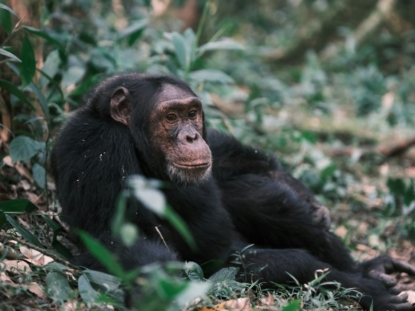
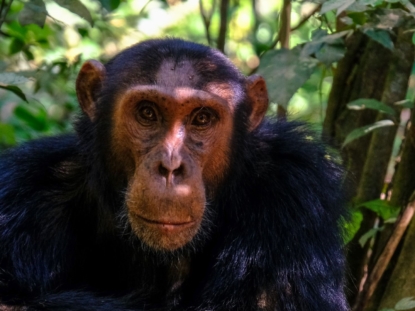
Chimpanzee tracking in Tanzania means trekking on foot to find wild chimps in the remote western forests of Mahale Mountains and Gombe on Lake Tanganyika, plus introduced chimps on Rubondo Island. African Safari Trails arranges chimpanzee tracking safaris with permits, fly-in transfers and the western circuit. Far from the savanna parks, this is one of the most special and remote of all things to do in Tanzania, and part of the wider tradition of chimpanzee tracking across East Africa.
Chimpanzee tracking is the wild card of a Tanzania trip, a world away from the open-plains safari. It happens deep in the western forests on the shore of Lake Tanganyika, where you trek up steep, humid slopes to spend an hour with wild chimps in the trees. Mahale Mountains is the premier spot, Gombe carries Jane Goodall’s legacy, and Rubondo Island offers a rewilded twist. All are remote and reached by light aircraft, which is exactly where African Safari Trails comes in.
What Chimpanzee Tracking in Tanzania Involves
Chimpanzee tracking means setting out on foot with a guide and ranger to find a habituated group of wild chimps in dense forest, guided by the calls and the trackers who know the group’s movements. Once found, you spend a strictly limited time, usually one hour, watching them feed, groom and move through the trees.
The trek can be short or last a few hours over steep, slippery ground, so reasonable fitness helps, and the chimps are wild, so sightings are likely but never promised. It is a close, moving wildlife experience on the chimps’ own terms. African Safari Trails arranges the permits, guides and trek.
Chimpanzee Tracking in Mahale Mountains
Mahale Mountains National Park is Tanzania’s premier place for chimpanzee tracking, a remote, forested range rising straight from the shore of Lake Tanganyika in the far west, home to around 700 to 1,000 wild chimps. A long-studied group, habituated by Japanese researchers from the 1960s, is the one visitors track.
The trek climbs through thick forest and can take up to a few hours to reach the chimps, who roam freely, with an hour allowed in their company once found. The setting, forest meeting a vast clear lake, is one of Africa’s finest. Permits and a minimum age apply. African Safari Trails arranges Mahale tracking and the fly-in.
Tracking chimps in Mahale is nothing like a game drive. There is no vehicle, no road, just a steep climb through humid forest with a tracker reading broken stems and distant calls. Then, suddenly, they are there: a mother grooming her infant, a male drumming on a buttress root, a whole family moving through the canopy overhead. You get one hour, and it goes far too fast.
Gombe: Tracking Jane Goodall’s Chimps
Gombe National Park is Tanzania’s smallest national park and the most famous chimp site of all, where Jane Goodall began her ground-breaking study in 1960, on a thin strip of forest along Lake Tanganyika near Kigoma. Tracking here follows the Kasekela community, the very chimps her research made known worldwide.
The park has no roads and is reached only by boat, which adds to its sense of remoteness, and the treks through its steep valleys turn up waterfalls and birdlife as well as chimps. Its history gives tracking here a special weight. Permits and a minimum age apply. African Safari Trails arranges Gombe tracking and transfers.
Tracking Rubondo Island’s Introduced Chimps
Rubondo Island National Park offers a different kind of chimpanzee tracking, on a forested island in Lake Victoria where chimps rescued from European zoos were released in the late 1960s in a pioneering rewilding project. Their descendants are now genuinely wild, and a habituation programme lets visitors join the effort to find them.
Because these chimps are still being habituated, the tracking is more of a real search than at Mahale or Gombe, often a full, active day on foot with no promised sighting. The reward is sharing in an unusual conservation story. African Safari Trails sets honest expectations and arranges Rubondo tracking.
What a Chimp Trek Is Like
A chimp trek starts early, with a briefing on the rules before you set off into the forest behind a guide and tracker. The going is often steep, muddy and humid, with no set path, since you follow where the chimps have moved, so a decent level of fitness and sturdy footwear make a real difference.
When you reach the group, you keep a set distance, wear a mask in some parks to protect them from disease, and stay for your allotted hour. The effort and the unpredictability are part of what makes it memorable. African Safari Trails prepares you for what the trek involves.
Mahale Mountains
The premier site, 700 to 1,000 wild chimps in forested mountains on Lake Tanganyika, with a long-habituated group to track.
Gombe
Tanzania’s smallest park and Jane Goodall’s research home, tracking the famous Kasekela community, reached only by boat.
Rubondo Island
Introduced chimps on a Lake Victoria island, still being habituated, tracked as part of a pioneering rewilding project.
The trek and the hour
A steep forest trek with a tracker, then a strictly limited hour watching the chimps feed, groom and move through the trees.
Permits, Rules and Age Limits
Chimpanzee tracking needs a permit, and the parks set firm rules to protect the chimps. A chimp permit at Mahale runs around 150 US dollars, with Gombe a little less, and a minimum age of fifteen applies at both, since the experience is demanding and the chimps must be kept safe.
Groups are small, time with the chimps is capped at an hour, and visitors keep their distance, often wear a mask, and stay healthy, as chimps catch human illnesses easily. These rules keep both chimps and trekkers safe. African Safari Trails secures the permits and briefs you on the rules.
Lake Tanganyika and the Wider Safari
The chimp parks sit on Lake Tanganyika, the world’s longest freshwater lake, so a tracking safari here comes with more than chimps. Mahale’s clear water offers snorkelling among colourful cichlid fish, kayaking and simply relaxing on white-sand beaches between treks.
Mahale also holds other primates and forest wildlife, and a multi-day hike up Mount Nkungwe is possible for the energetic, while the western parks pair naturally with Katavi National Park for a full wilderness circuit, and many travellers add classic game drives or a walking safari elsewhere in the country. The lake setting makes a chimp trip a rounded one. African Safari Trails builds the wider western circuit around the tracking.
Best Time for Chimpanzee Tracking
The dry season is clearly the best time for chimpanzee tracking, when the forest trails are firmer, the trekking easier and the chimps often lower down the slopes. The wet months bring harder, slippery going and tougher access.
July to October (dry season)
The best window, with drier, firmer trails, easier trekking and chimps often found lower on the slopes. Prime for Mahale and Gombe.
June and November (shoulder)
Quieter edges of the dry season, still good for tracking, with green forest and fewer visitors, though some rain is possible.
March to May (long rains)
The wettest months, with slippery, demanding trails and harder fly-in access, so the toughest time, and some camps close.
Budget for the fly-in, come reasonably fit, and give it more than one day. The chimp parks are genuinely remote, reached only by light aircraft and often a boat, so the transfers are a real part of the cost and the time. The trekking is steep and humid, so a decent level of fitness and broken-in shoes pay off, and a minimum age of fifteen applies. Two or three nights allow more than one trek, improving your chances and letting you enjoy Lake Tanganyika too. African Safari Trails arranges the permits, flights and pacing.
Getting to the Chimp Parks
Mahale and Gombe lie on the remote eastern shore of Lake Tanganyika in far western Tanzania, reached by light aircraft to an airstrip or to Kigoma, then by boat along the lake to the park. There are no roads into either, which is part of their wild appeal.
Rubondo Island is reached by light aircraft to its airstrip or by road and boat from Mwanza on Lake Victoria. The remoteness means flying is almost always the practical choice. African Safari Trails arranges the flights, boats and lodge transfers.
Chimpanzee Tracking in Tanzania FAQ
How much does chimpanzee tracking cost in Tanzania?
A chimp tracking permit costs around 150 US dollars at Mahale and a little less at Gombe, but the bigger cost is reaching these remote parks by light aircraft and boat, plus the lodges, so a chimp trip is a significant part of a Tanzania budget. Rubondo’s habituation experience is charged separately. African Safari Trails builds a clear, all-in quote.
Where is the best place to track chimps in Tanzania?
Mahale Mountains is the premier site, with 700 to 1,000 wild chimps and a long-habituated group in a beautiful lake-and-forest setting, while Gombe offers Jane Goodall’s famous chimps in the smallest park, and Rubondo a rewilding twist. Mahale is most visitors’ choice. African Safari Trails matches the park to your trip and budget.
How hard is the chimp trek?
It can be demanding, often a steep, muddy, humid climb of anything from under an hour to a few hours, with no set path since you follow the chimps. Reasonable fitness and sturdy footwear help a great deal, and Rubondo’s tracking can be a full active day. African Safari Trails prepares you for what to expect.
Are chimp sightings guaranteed?
No. The chimps are wild and free, so sightings are likely but never promised, especially at Rubondo where the chimps are still being habituated and tracking is more of a genuine search. More than one trek improves your chances. African Safari Trails sets honest expectations and builds in time where it can.
Is there an age limit for chimp tracking?
Yes, a minimum age of fifteen applies at Mahale and Gombe, since the trekking is demanding and the chimps must be protected from stress and disease. Visitors also keep their distance, often wear a mask, and must be in good health. African Safari Trails confirms the rules when booking.
When is the best time to track chimps?
The dry season from July to October is best, with firmer trails, easier trekking and chimps often lower on the slopes, while the long rains from March to May make the going slippery and access harder. African Safari Trails times your tracking for the best conditions.
Plan Your Chimpanzee Tracking Safari with African Safari Trails
Securing permits, arranging the light-aircraft and boat transfers to these remote forests, and pacing the trip so you get more than one chance with the chimps all go more smoothly with someone who knows the western parks, so the effort of getting there pays off in time with the chimps. African Safari Trails has spent years building chimp tracking safaris, with people who know Mahale, Gombe and Rubondo and their forests by instinct rather than a brochure. They will tell you straight what the trek involves and what the chimps are likely to do, and shape the trip around the tracking and Lake Tanganyika, with the permits, flights and transfers handled quietly in the background.
Want a proper quote, or just a steer on which chimp park to choose? Reach out to African Safari Trails and a real person gets back to you.