Cultural tours in Tanzania introduce you to its 120-plus peoples, from Maasai herders and Hadzabe hunter-gatherers to Chagga coffee farmers and the Swahili coast. African Safari Trails arranges Tanzania cultural tours and village visits, easily paired with a safari or beach stay. Beyond the wildlife, these visits offer a respectful, human side of Tanzania.
Tanzania is far more than its wildlife, and a cultural tour is the way to meet the people who share the land with it. With over 120 ethnic groups, the country offers everything from a morning hunt with the Hadzabe, one of Africa’s last hunter-gatherer peoples, to coffee with Chagga farmers on Kilimanjaro and the old Swahili streets of Stone Town. Done well, these visits are a genuine, respectful exchange rather than a staged show, and they slot easily around a safari, echoing the wider cultural tours in East Africa. African Safari Trails arranges the visits with care.
What Cultural Tours in Tanzania Offer
A cultural tour takes you into villages and communities to see how Tanzanians live, work and celebrate, whether walking a market, sharing a meal, learning a craft or joining a dance. The pace is slow and the point is connection, meeting elders, herders, hunters and artisans on their own ground.
With more than 120 peoples across the country, the range is huge, from pastoralists and hunter-gatherers to farmers, fishers and traders, each with their own language and customs. Good tours benefit the community and respect the culture. African Safari Trails arranges visits that are genuine and fairly run.
Maasai Village Tours
The Maasai are Tanzania’s most recognisable people, and a Maasai village tour is the most popular cultural visit, taking you into a boma, the fenced homestead of mud-and-stick houses, on the plains around Ngorongoro, the Serengeti and Lake Natron. You meet a herding family living much as they always have.
A visit usually includes traditional song and dance, a look at daily life and cattle herding, beadwork by the women and stories from the elders, with the chance to buy crafts that support the community. Some tours offer an overnight stay for a deeper feel. African Safari Trails arranges respectful Maasai visits.
The Hadzabe of Lake Eyasi may be the most striking people you will ever meet. One of the last true hunter-gatherer societies on earth, they have lived the same way for thousands of years, speaking a click language and making fire by hand. To join them on a dawn hunt, bow in hand, is to step briefly into how all of humanity once lived.
The Hadzabe and Datoga at Lake Eyasi
Lake Eyasi, a soda lake below the Ngorongoro Highlands, is the place to meet two singular peoples. The Hadzabe are among Africa’s last hunter-gatherers, who have lived here for thousands of years, speak a click language and still hunt with bows and arrows and forage for tubers, fruit and honey.
An early-morning visit joins the men on a hunt or the women foraging, a rare window into an ancient way of life. Nearby, the Datoga are skilled blacksmiths and pastoralists who forge arrowheads, knives and jewellery by hand. The pairing is one of Tanzania’s finest cultural experiences. African Safari Trails arranges Lake Eyasi visits.
Chagga Culture and Coffee Tours
On the green lower slopes of Kilimanjaro live the Chagga, farmers known for coffee, bananas and a strong tradition of hospitality, and a Chagga tour around Marangu or Materuni is a rewarding cultural day. The highlight for many is the coffee, grown organically and prepared by hand.
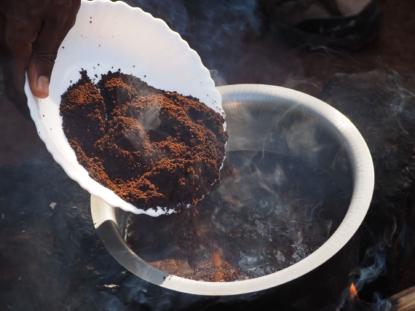
A typical visit takes in a coffee plantation, where you grind and roast your own beans, the centuries-old underground tunnels the Chagga built to shelter from raids, a waterfall walk and a taste of the local banana beer, mbege. It pairs perfectly with a Kilimanjaro climb. African Safari Trails arranges Chagga and coffee tours.
Mto wa Mbu and Village Walking Tours
Near Lake Manyara, the market town of Mto wa Mbu is one of Tanzania’s most diverse spots, said to hold people from all of the country’s many tribes, and a village walking tour here is an easy, rich half-day. You explore on foot, by bicycle or by tuk-tuk among banana plantations, farms and the busy market.
The visit takes in local crafts, from pottery and weaving to iron-smelting, a taste of banana beer and a home-cooked Tanzanian lunch, all showing how many peoples live side by side. It fits neatly with a Lake Manyara or Ngorongoro day. African Safari Trails arranges Mto wa Mbu village tours.
Maasai villages
A boma visit on the northern plains, with song, dance, beadwork and elders’ stories, sometimes with an overnight stay.
Hadzabe and Datoga, Lake Eyasi
A dawn hunt with Africa’s last hunter-gatherers and a visit to Datoga blacksmiths, a rare window into ancient ways.
Chagga and coffee, Kilimanjaro
Coffee plantation tours, the old Chagga tunnels, a waterfall and banana beer on Kilimanjaro’s slopes.
Mto wa Mbu and Stone Town
A diverse market-town village walk near Manyara, and the Swahili history of Stone Town on the Zanzibar coast.
Swahili Culture and Stone Town
On the coast, Tanzania’s culture turns Swahili, a blend of African, Arab and Indian threads woven over centuries of Indian Ocean trade. Stone Town on Zanzibar, a World Heritage site, is the heart of it, a maze of carved doors, narrow lanes, markets and old merchant houses.
A guided walk through Stone Town brings its layered history alive, from the spice trade to its music and food, and the wider coast adds old Swahili ports and ruins. It pairs naturally with a Zanzibar beach stay. African Safari Trails arranges Stone Town and Swahili coast tours.
Combining Culture with a Safari
The beauty of a cultural visit is how easily it folds into a wildlife safari. A Maasai boma or Mto wa Mbu walk slots into a northern circuit between game drives, Lake Eyasi sits beside Ngorongoro, and the Chagga slopes pair with a Kilimanjaro climb or a start in Moshi.
Many travellers add a half or full cultural day to a Tanzania safari, or build a dedicated cultural circuit linking several peoples, finishing on the Swahili coast. The mix of wildlife and culture makes for a fuller trip. African Safari Trails weaves culture and safari together.
Visiting Respectfully
A good cultural tour is a respectful exchange, not a human zoo, so choosing visits that genuinely benefit the community matters. The best tours are community-run or share fees fairly, support local livelihoods and let you meet people as people rather than as a performance.
Simple courtesies help: ask before taking photographs, dress modestly, buy crafts directly, and follow your guide’s lead on customs, especially on the largely Muslim coast. Treated this way, these visits help preserve languages and traditions. African Safari Trails works with communities and guides who run visits ethically.
Best Time and Planning Your Cultural Tour
Cultural tours run year-round, but the dry season eases travel to spots like Lake Eyasi, while town and village visits such as Mto wa Mbu work at any time. Most cultural visits are half or full days slotted into a wider trip.
June to October (dry season)
The easiest time for travel and rougher-road visits like Lake Eyasi, and the main safari season, so culture pairs neatly with game drives.
November to March (green season)
Green and quieter, fine for most cultural visits, with town and village tours like Mto wa Mbu working well year-round.
Any time (towns and coast)
Mto wa Mbu, the Chagga slopes and Stone Town are accessible all year, easy to add to a safari or beach stay whenever you travel.
Add culture to a safari, choose ethical visits, and go in with respect. Cultural tours work best woven into a wider trip: a Maasai boma or Mto wa Mbu walk between game drives, Lake Eyasi beside Ngorongoro, the Chagga slopes with a Kilimanjaro climb, and Stone Town with a Zanzibar beach stay. Pick community-run or fairly-run visits that benefit the people you meet, ask before photographing, dress modestly and follow your guide’s lead, especially on the Muslim coast. Treated as a genuine exchange, these visits are among the richest parts of a trip. African Safari Trails arranges them with care.
Cultural Tours in Tanzania FAQ
How much do cultural tours in Tanzania cost?
Most cultural visits are modest, with village or community fees of roughly 10 to 30 US dollars per person, often going largely to the community, plus a guide and transport, and they are usually added to a wider safari rather than booked alone. Lake Eyasi and remote visits cost a little more for the travel. African Safari Trails builds them into a clear, all-in quote.
Which cultural tours are best in Tanzania?
The most rewarding are a Maasai village visit on the northern plains, the Hadzabe and Datoga at Lake Eyasi, the Chagga coffee slopes of Kilimanjaro, the diverse market town of Mto wa Mbu, and Swahili Stone Town on Zanzibar. Each shows a very different side of Tanzania. African Safari Trails matches the visits to your trip.
Are cultural tours ethical?
They can be very much so when chosen well. The best are community-run or share fees fairly, support local livelihoods and offer a genuine exchange rather than a staged show, helping preserve languages and traditions. Asking before photographing and buying crafts directly helps. African Safari Trails works with communities and guides who run visits ethically.
Can I combine a cultural tour with a safari?
Yes, easily, and most visitors do. A Maasai boma or Mto wa Mbu walk slots into a northern circuit, Lake Eyasi sits beside Ngorongoro, the Chagga slopes pair with a Kilimanjaro climb, and Stone Town with a beach stay. African Safari Trails weaves culture and safari into one trip.
Who are the Hadzabe?
The Hadzabe are one of Africa’s last true hunter-gatherer peoples, living around Lake Eyasi much as they have for thousands of years, speaking a click language and hunting with bows and arrows while foraging for tubers, fruit and honey. A dawn visit is a rare window into an ancient way of life. African Safari Trails arranges respectful Hadzabe visits.
How should I behave on a cultural visit?
With respect and curiosity: ask before taking photographs, dress modestly, especially on the largely Muslim coast, buy crafts directly to support the community, and follow your guide’s lead on customs. Treating it as a genuine exchange makes it richer for everyone. African Safari Trails briefs you on the customs before each visit.
Plan Your Tanzania Cultural Tour with African Safari Trails
Choosing visits that are genuine and fairly run, slotting them between game drives or onto a beach stay, and going in with the right preparation all go more smoothly with someone who knows Tanzania’s communities, so a cultural tour becomes a real exchange rather than a staged stop. African Safari Trails has spent years arranging cultural visits, working with communities and guides who open doors respectfully rather than putting on a show. They will tell you straight which visits are worthwhile and how to behave as a welcome guest, and weave culture into your wider trip, with the logistics handled quietly in the background.
Want a proper quote, or just a steer on adding culture to a safari? Reach out to African Safari Trails and a real person gets back to you.