Bird watching in Tanzania spans more than 1,100 species across savanna, lakes, mountains and coast, from flamingos on Lake Manyara to endemics in the Eastern Arc Mountains. African Safari Trails arranges Tanzania birding safaris with specialist guides across the northern, southern and montane circuits. With over 30 endemics and rich migrant numbers, it is one of Africa’s top birding destinations and a highlight of any East Africa birding trip.
Tanzania is one of the great birding countries, with a list well over 1,100 species, the third largest in Africa, packed into an unusual spread of habitats. You can scan flamingo-pink lakes in the Rift Valley, pick out colourful lovebirds in the acacia, and hunt down forest endemics found nowhere else on earth in the ancient Eastern Arc Mountains. Best of all, much of it sits along the safari routes, so birds and big game come together. A specialist guide makes it sing, and that is what African Safari Trails arranges.
Bird Watching Across Tanzania’s Habitats
Bird watching in Tanzania thrives on variety, with more than 1,100 recorded species across savanna, alkaline and freshwater lakes, montane forest, wetland and coast, the third richest bird list of any African country. That range of habitats is what packs in so much diversity.
The country also holds more than thirty endemic or near-endemic species, birds found here and almost nowhere else, the prizes for keen birders. Better still, most birding sits alongside the wildlife, so a safari and a birding trip can be one and the same, sitting among the wider things to do in Tanzania on any Tanzania safari. African Safari Trails builds birding across the right mix of habitats.
Bird Watching on the Northern Circuit
The northern circuit pairs superb bird watching with classic game viewing. The Serengeti holds over 500 species, from the huge Kori Bustard and the secretary bird to vultures, the Bateleur and the bright Fischer’s lovebird, while the open plains make them easy to see between the cats and the migration.
Tarangire is a standout, with over 550 species and northern endemics like the ashy starling, yellow-collared lovebird and rufous-tailed weaver among its baobabs, and Ngorongoro adds highland and forest birds. The birds come free with the game here. African Safari Trails weaves birding into a northern safari.
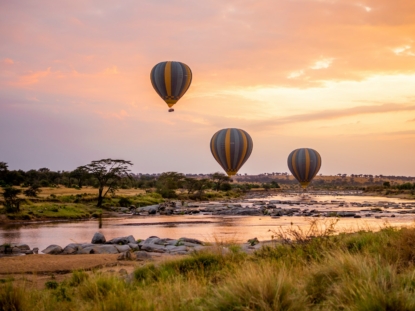
The joy of birding in Tanzania is that you rarely have to choose between birds and big game. You can be watching a lion at a kill while a lilac-breasted roller flashes past and a secretary bird stalks the grass behind it. More than 1,100 species share the same plains, lakes and forests as the elephants and the migration, so every game drive doubles as a birding outing if you let it.
Flamingos at Lake Manyara and Lake Natron
The Rift Valley lakes are Tanzania’s great water-bird spectacle. Lake Manyara, a shallow alkaline lake below the escarpment, can turn pink with lesser flamingos and holds over 400 species, with more than a hundred possible in a single day, alongside pelicans, spoonbills and storks.
Lake Natron, further north, is the most important breeding site for lesser flamingos in East Africa, drawing vast flocks to its caustic waters. Together they are unmissable for anyone drawn to water birds. The flamingo numbers shift with water and season. African Safari Trails times a visit for the flamingos and the lakes.
Endemics in the Eastern Arc Mountains
For serious birders, the real prizes lie in the Eastern Arc Mountains, an ancient chain of forested ranges whose long isolation has produced birds found nowhere else. Udzungwa holds the rare Udzungwa forest partridge and the rufous-winged sunbird, while the Usambara and Uluguru mountains add their own endemics.
These forest birds take more effort than the open-country species, calling for patient walks and a sharp ear in the montane forest, but they are the heart of a dedicated Tanzania birding trip. The Eastern Arc is a global biodiversity hotspot. African Safari Trails arranges montane birding with specialist guides.
Bird Watching in the Southern and Western Parks
Bird watching in the quieter south and west adds different birds and far fewer people. Nyerere, with its Rufiji River, offers superb water birding by boat, with African skimmers, Pel’s fishing owl and carmine bee-eaters, while Ruaha holds over 570 species including miombo specialists and the Tanzanian red-billed hornbill.
The western and Kagera parks add wetland species and the chance of the strange shoebill stork in the papyrus swamps, a top target for many. These parks reward birders who like solitude with their species. African Safari Trails builds southern and western birding circuits.
Northern circuit
Serengeti, Tarangire and Ngorongoro for raptors, bustards and northern endemics like the yellow-collared lovebird, alongside big game.
Rift Valley lakes
Lake Manyara and Lake Natron for vast flocks of lesser flamingos, pelicans, spoonbills and other water birds.
Eastern Arc Mountains
Udzungwa, Usambara and Uluguru for forest endemics like the Udzungwa partridge, found nowhere else on earth.
South, west and coast
Rufiji River water birds, Ruaha’s miombo species, western wetland shoebills and Pemba’s four island endemics.
Tanzania’s Endemic Birds
The endemics are what set Tanzania apart for collectors of bird lists, with more than thirty species found only here or in tiny neighbouring ranges. The northern savanna holds the grey-breasted spurfowl, ashy starling and rufous-tailed weaver, all restricted to Tanzania alone.
The Eastern Arc forests hold the bulk of them, from the Udzungwa forest partridge to the Usambara eagle-owl and Uluguru bushshrike, while Pemba Island off the coast has four endemics of its own, including the Pemba scops owl. Tracking these down is a birding mission in itself. African Safari Trails plans trips around the endemics you want.
Coastal and Island Bird Watching
The coast and islands round out Tanzania’s bird watching, with mangroves, reefs and farmland holding their own specialities. Pemba Island is the headline, with four endemic birds, the Pemba scops owl, green pigeon, sunbird and white-eye, found on no other land on earth.
The wider Swahili coast and Zanzibar add mangrove kingfishers, crab plovers and a range of seabirds and terns, easily folded into a beach stay. A birding extension to the coast pairs neatly with safari and forest. African Safari Trails can add coastal and Pemba birding to a wider trip.
Best Time for a Tanzania Birding Safari
Birding is good year-round in Tanzania, but the green season from November to April is the richest, when migrants from Europe and Asia arrive and resident birds show their breeding colours, while the dry season is easier for combining birds with big game.
November to April (green season)
The best for birding, with migrants from Europe and Asia, breeding plumage and full wetlands, though some areas are wetter and harder to reach.
June to October (dry season)
Easier access and resident birds gathered at water, ideal for combining birding with big-game viewing on the main circuits.
Year-round montane forests
The Eastern Arc forest endemics can be sought all year, with the dry months giving firmer trails for the steeper montane birding.
Bring a specialist guide, good optics, and target your habitats. A regular safari guide knows the common birds, but a dedicated bird guide who knows the calls and the sites transforms a birding trip, especially for the forest endemics. Pack 8×42 or 10×42 binoculars and a good East African field guide, and decide what you are after: open-country and water birds on the northern circuit and Rift lakes, or the harder forest endemics in the Eastern Arc. The green season from November adds the migrants. African Safari Trails sets the guide, route and habitats around your list.
Tips and Gear for Bird Watching
Good bird watching rewards a little preparation. A solid pair of binoculars, around 8×42 or 10×42, and a field guide to the birds of East Africa are the basics, with a spotting scope useful for distant water birds and raptors, and a long camera lens for photography.
Early mornings and late afternoons are the most active birding times, neutral clothing helps, and patience and a sharp ear pay off, especially for forest species. Above all, a knowledgeable guide finds far more than you would alone. African Safari Trails pairs you with specialist birding guides and advises on gear.
Bird Watching in Tanzania FAQ
How much does a Tanzania birding safari cost?
Birding trips cost much like other safaris, driven by park fees, vehicle, guide and accommodation, with a specialist bird guide an added but worthwhile cost. Northern-circuit park fees run from around 45 to 80 US dollars per day plus VAT, with southern, western and montane parks generally lower. African Safari Trails builds a clear, all-in quote around your itinerary.
How many bird species are there in Tanzania?
Tanzania has a recorded list of more than 1,100 species, the third largest of any African country, including over thirty endemic or near-endemic birds found here and almost nowhere else. The range comes from its mix of savanna, lakes, mountains, wetland and coast. African Safari Trails plans trips around the species and habitats you want.
Where are the best birding spots?
The northern circuit of Serengeti, Tarangire, Ngorongoro and Lake Manyara pairs superb birding with big game, the Rift Valley lakes hold the flamingos, and the Eastern Arc Mountains, such as Udzungwa and the Usambaras, hold the forest endemics. Nyerere and Pemba add water and island birds. African Safari Trails matches the sites to your interests.
When is the best time to go birding?
The green season from November to April is the richest for birding, when migrants arrive and residents are in breeding plumage, while the dry season from June to October is easier for combining birds with big game and gives firmer trails for montane forest birding. African Safari Trails times your trip around what you want to see.
Do I need a specialist bird guide?
For serious birding, yes. A regular safari guide knows the common species, but a dedicated bird guide who knows the calls, behaviour and exact sites finds far more, especially the tricky forest endemics. It is the single best upgrade for a birding trip. African Safari Trails arranges specialist birding guides.
Can I combine birding with a wildlife safari?
Easily, and most birders do. More than 1,100 species share the same parks as the big game, so a game drive on the northern circuit doubles as a birding trip, and a montane or coastal extension adds the endemics. The two fit together naturally. African Safari Trails builds a trip that balances birds and wildlife as you wish.
Plan Your Tanzania Birding Safari with African Safari Trails
Choosing the right mix of habitats, timing the trip for migrants or big game, and pairing you with a guide who knows the calls and the sites all go more smoothly with someone who understands Tanzania’s birding, so your list grows and the endemics turn up rather than slip past. African Safari Trails has spent years building birding safaris across the country, with guides who know the savanna, the Rift lakes and the Eastern Arc forests by instinct rather than a brochure. They will tell you straight what each circuit delivers and how to target the species you want, and shape the trip around the birds, with the guides, vehicles and permits handled quietly in the background.
Want a proper quote, or just a steer on building a birding itinerary? Reach out to African Safari Trails and a real person gets back to you.