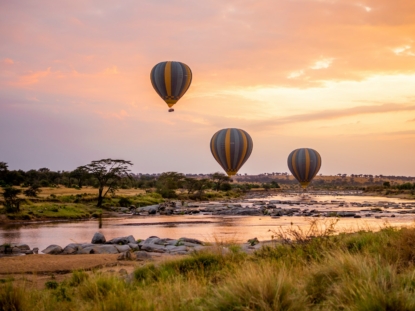
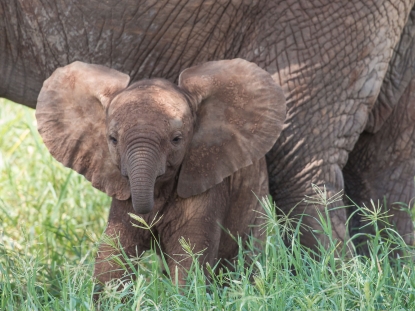
Mkomazi National Park is a semi-arid park in north-eastern Tanzania, known for its black rhino reserve, African wild dogs and dry-country wildlife like gerenuk and oryx. African Safari Trails arranges Mkomazi safaris with game drives, rhino reserve visits, walking safaris and birding, reached from Moshi or Kilimanjaro airport. Covering about 3,245 square kilometres beside Kenya’s Tsavo, it is a quiet, conservation-focused alternative to the busy northern circuit.
Mkomazi is the northern park most people skip, which is exactly why it rewards those who go. This dry, baobab-dotted bushland near the Kenyan border is one of only a couple of places in Tanzania to see black rhino, the centre of a hard-won conservation story, and one of the country’s most reliable spots for African wild dogs. Add gerenuk and oryx you will not find on the famous circuit, near-empty tracks and Kilimanjaro on the skyline. African Safari Trails handles the planning and the rhino-reserve booking.
Why a Mkomazi National Park Safari Stands Out
A Mkomazi safari stands out for conservation and solitude across roughly 3,245 square kilometres of dry Acacia-Commiphora bush in north-eastern Tanzania, contiguous with Kenya’s Tsavo West and part of the same great ecosystem. It is one of the few places to see black rhino in Tanzania and among the best for African wild dogs, both saved here by decades of work.
Wildlife is thinly spread and the going is quiet, with almost no other vehicles, so it suits travellers who value space and a conservation focus over big numbers. The Pare and Usambara mountains and distant Kilimanjaro frame the plains. African Safari Trails builds Mkomazi in as a quiet, meaningful leg of a northern trip.
The Black Rhino Reserve
The black rhino reserve is the heart of Mkomazi’s story. In the 1960s more than four hundred black rhino roamed here, but poaching wiped them out by the late 1980s, and from 1989 the conservationist Tony Fitzjohn and the George Adamson Wildlife Preservation Trust began the long rebuild, reintroducing eastern black rhino into a protected, fenced reserve in the 1990s.
Today the reserve is one of Tanzania’s key strongholds for the species, and since 2019 visitors can enter on a guided ranger drive to see the rhino in their dry-country home, a moving conservation experience rather than a casual sighting. It is booked separately and carries its own fee. African Safari Trails arranges the rhino-reserve visit with the park team.
Mkomazi tells a rare conservation success. Black rhino numbered over four hundred here in the 1960s, then poaching erased them entirely. From 1989 Tony Fitzjohn and his team rebuilt the place from a poached-out reserve, reintroducing rhino and breeding wild dogs, and growing the elephants from eleven to hundreds. To stand in the reserve today is to see what decades of stubborn work can recover.
Tracking African Wild Dogs at Mkomazi
Mkomazi runs one of Africa’s longest-standing African wild dog programmes, having bred and released around two hundred of these endangered carnivores back into the wider ecosystem over the years. A breeding group is kept in protected enclosures for its safety, where visitors can see the dogs up close, while free-roaming packs range the broader park.
Sightings of the wild packs are uncommon but most likely in the denning season, roughly June to August, when they stay put. The dogs are one of Mkomazi’s signature draws for repeat safari-goers. Sightings of wild packs are never promised. African Safari Trails works with rangers who track the dogs’ movements.
Game Drive Safaris and Dry-Country Wildlife
A Mkomazi game drive safari works the open savanna, acacia woodland and rocky hills, with a popular circuit running from the Zange gate past the Dindera and Norbanda dams where wildlife gathers. Big game includes elephant, recovered from just eleven animals to several hundred, plus buffalo, giraffe, zebra, eland, hartebeest and lion.
Leopard and cheetah are present but, in this former hunting reserve, the game is thinly spread and shy, so drives reward patience over quick tallies. The dry season concentrates animals at the water and thins the bush. African Safari Trails plans drives around the dams and the seasons for the best chances.
Gerenuk, Oryx and the Tsavo Ecosystem
Mkomazi’s dry climate gives it an unusual cast you will not meet on the green northern circuit. This is the one reliable place in Tanzania to see the gerenuk, the long-necked gazelle that stands upright on its hind legs to browse acacia, alongside the fringe-eared and beisa oryx, lesser kudu and Grant’s gazelle.
Because the park is contiguous with Kenya’s Tsavo West, animals move across the border with the seasons, and the shared ecosystem supports species adapted to harsh, semi-arid country. These dry-land specials are a real draw for keen wildlife-watchers. African Safari Trails plans drives into the areas where the gerenuk and oryx range.
Black rhino reserve
A guided ranger drive into the fenced reserve to see reintroduced eastern black rhino, one of few places in Tanzania to do so.
African wild dogs
A long-running breeding programme, with dogs viewable in protected enclosures and free packs ranging the wider park.
Dry-country game
Gerenuk, oryx and lesser kudu found here and almost nowhere else in Tanzania, plus elephant, giraffe and lion.
Walking and birding
Guided walks among baobabs with Kilimanjaro views, and over 400 bird species including dry-country specials.
Walking Safaris and the Conservation Story
A walking safari in Mkomazi makes the most of its open space and low visitor numbers, a guided walk with an armed ranger from the main gate across rolling hills, rocky outcrops and dry bush dotted with ancient baobabs. Walks usually run two to three hours and reach viewpoints over the valley toward Kilimanjaro.
On foot the focus shifts to tracks, plants and the smaller life a drive races past, and a good guide weaves in the park’s conservation history. The dry season suits walking best. The quiet here is part of the appeal. African Safari Trails arranges guided walks with experienced rangers.
Bird Watching in Mkomazi
Bird watching in Mkomazi records over four hundred species, a strong list for a dry park, with several found in few other parts of Tanzania. The Sahel-zone and dry-country specials are the highlight, including the vulturine guineafowl, the pygmy falcon, the violet wood-hoopoe and Friedmann’s lark, alongside strong raptor numbers.
The wet season from November brings migrants and the richest birding, when the bush greens and the mountain backdrops sharpen. Birding folds naturally into a game drive or a walk here. African Safari Trails can pair you with a birding guide for the dry-country and raptor species.
Best Time for a Mkomazi Safari
Mkomazi is at its best in the dry season, when wildlife gathers at the water, the rhino reserve is most rewarding and the wild dogs den, while the wet season greens the bush and sharpens the mountain views. The park lies in one of Tanzania’s driest corners.
June to October (dry season)
The best for wildlife, with thin bush and animals at the dams, the rhino reserve open and clear, and wild dogs denning from June to August.
March to June (scenic green)
The bush turns green and the Pare, Usambara and Kilimanjaro views are at their most dramatic, fine for birding and scenery.
November to May (wet season)
Green and quiet with migrant birds and seasonal elephant movement to and from Tsavo, though wildlife is more dispersed.
Book the rhino reserve ahead, and combine Mkomazi with a Kilimanjaro climb or the northern circuit. The black rhino reserve is a separate, guided experience that needs arranging in advance and carries its own fee, so plan it rather than hoping to drop in. Mkomazi needs only a day or two, which makes it an ideal recovery add-on after
climbing Kilimanjaro from nearby Moshi, or a quiet complement to
Tarangire and the northern parks. African Safari Trails sets up the reserve visit and the wider trip.
Getting to Mkomazi National Park
Mkomazi sits in north-eastern Tanzania near the town of Same, the location of the main Zange gate, about 110 kilometres and two hours by road from Moshi, or roughly 140 kilometres and two and a half hours from Kilimanjaro International Airport. This easy access, yet quiet interior, is part of its appeal.
The park also has an airstrip for fly-in visitors, and it links naturally with a Kilimanjaro climb, Arusha National Park or the Pare and Usambara mountains nearby. Most visitors arrive by road on a short transfer. African Safari Trails arranges the transfer and slots Mkomazi into a northern itinerary.
Mkomazi National Park Safari FAQ
How much does it cost to enter Mkomazi National Park?
Park entry for foreign non-residents is around 30 US dollars per adult per 24 hour period plus 18 percent VAT, with children aged 5 to 15 about 10 dollars, residents 15 dollars and East African citizens roughly 5,000 shillings. The black rhino reserve visit is a separate guided experience with its own fee on top. African Safari Trails confirms the current fees and includes them in your quote.
Can you see black rhino at Mkomazi?
Yes, Mkomazi is one of only a couple of places in Tanzania to see black rhino, viewed on a guided ranger drive into the fenced reserve, open to visitors since 2019. The reserve is large and the rhino genuinely wild, so sightings are likely but not guaranteed, and the visit must be booked ahead. African Safari Trails arranges the rhino-reserve visit with the park team.
What wildlife can I see in Mkomazi?
Mkomazi holds elephant, buffalo, lion, giraffe, zebra and eland, plus dry-country specials seen in few other Tanzanian parks, including gerenuk, fringe-eared and beisa oryx and lesser kudu, along with reintroduced black rhino and African wild dogs. The game is thinly spread and shy, so patience pays. African Safari Trails plans drives to give the best chances.
When are wild dogs most likely to be seen?
A breeding group can be seen in protected enclosures year-round, while free-roaming packs are most likely in the denning season, roughly June to August, when they stay put. Sightings of the wild packs are never guaranteed, as they range widely into the Tsavo ecosystem. African Safari Trails works with rangers who follow the dogs’ movements.
How do I get to Mkomazi, and how long should I stay?
It is about 110 kilometres and two hours from Moshi, or 140 kilometres from Kilimanjaro International Airport, with the main Zange gate near Same town, and an airstrip for fly-in visitors. A day or two is enough, which makes it a fine add-on after a Kilimanjaro climb or alongside the northern circuit. African Safari Trails arranges the transfer and the wider trip.
When is the best time to visit Mkomazi?
The dry season from June to October is best for wildlife, when animals gather at the dams, the rhino reserve is clearest and wild dogs den, while the wet months green the bush, bring migrant birds and sharpen the mountain views. African Safari Trails times your visit around what you most want to see.
Plan Your Mkomazi Safari with African Safari Trails
Booking the rhino reserve, timing a visit for the dry-season game and the wild dogs, and slotting Mkomazi alongside a Kilimanjaro climb or the northern parks all go more smoothly with someone who knows this quiet corner, so a conservation-minded detour pays off. It is one of the quieter of Tanzania’s national parks, and folds easily into a wider Tanzania safari. African Safari Trails has spent years building Mkomazi safaris, with guides who know the dry-country wildlife and the park’s recovery story by instinct rather than a brochure. They will tell you straight what the thinly spread game asks of you and what the rhino reserve involves, and shape the days around what you most want, with the bookings and transfers handled quietly in the background.
Want a proper quote, or just a steer on fitting Mkomazi into a northern trip? Reach out to African Safari Trails and a real person gets back to you.