Ruaha National Park is a vast, remote wilderness in southern Tanzania known for Tanzania’s largest elephant population, huge lion prides and African wild dogs. African Safari Trails arranges Ruaha safaris with game drives, walking safaris and fly-in transfers from Dar es Salaam or Arusha. Covering over 20,000 square kilometres along the Great Ruaha River, it is a highlight of the southern circuit, where eastern and southern African species overlap.
Ruaha is the park seasoned safari-goers rave about and first-timers have rarely heard of. Deep in southern-central Tanzania, it is enormous, wild and gloriously empty of other vehicles, with the kind of predator action that earns documentaries. Elephants gather in their hundreds along the Great Ruaha River, lions hunt in big prides, and wild dogs still run here. The trade-off is distance, since it takes effort to reach. African Safari Trails handles the flights and the camps.
Why a Ruaha National Park Safari Stands Out
A Ruaha safari stands out for raw wilderness and wildlife density across more than twenty thousand square kilometres, one of the largest national parks in Tanzania and the centre of a far bigger protected ecosystem. Far off the northern circuit, it sees a fraction of the visitors, so game drives are unhurried and you often have a sighting to yourself.
The park sits where eastern and southern African species meet, giving it an unusual cast, and the Great Ruaha River is the thread that draws it all together. Established in the 1960s, it remains one of Africa’s truly wild places. African Safari Trails shapes a Ruaha safari around its rivers, predators and solitude.
Elephant Herds Along the Great Ruaha River
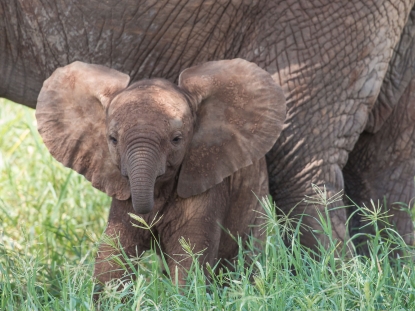
Ruaha holds the largest elephant population of any national park in East Africa, and seeing them is the heart of a visit. In the dry season the herds, sometimes a hundred strong, gather along the Great Ruaha River, and you can watch them digging in the dry sand with trunks and tusks to reach the water beneath.
The river is the park’s lifeline, fringed with baobabs, acacias and the odd Borassus palm, and in the dry months it pulls in elephant, buffalo, antelope and the predators that follow. The sight of a big herd crossing the sand is the signature Ruaha moment. African Safari Trails bases you where the elephants concentrate.
In the dry season the Great Ruaha River shrinks to pools and bare sand, and the elephants come down in their hundreds to dig for water with their trunks. Baobabs stand over the riverbed, lions wait in the shade, and there is rarely another vehicle in sight. This is southern Tanzania at its wildest.
Lions, Predators and Game Drive Safaris
The Ruaha game drive safari is famous for predators, and lions above all, since the greater Ruaha ecosystem holds an estimated tenth of the world’s remaining lions, often in prides of twenty or more adapted to hunting big prey like buffalo. The Mwagusi area is the prime ground for lion sightings.
Leopard, cheetah and spotted hyena fill out the predator list, and Ruaha shelters one of the continent’s largest remaining groups of endangered African wild dogs, seen here more often than in most parks. Sightings are never promised, but the density is rare. African Safari Trails works with guides who know where the prides hunt.
Walking Safaris in Ruaha
A walking safari in Ruaha swaps the vehicle for a guided walk on foot with an armed ranger, getting you close to the smaller workings of the bush and, now and then, within careful distance of big game. Camps like Jongomero, Kwihala, Kigelia and Mwagusi run walks with experienced guides.
On foot the focus shifts to tracks, plants, dung and birdsong, the detail a drive races past, and there is little to match standing quietly near a feeding elephant. Some camps limit walks where elephant numbers are high, for safety. The dry season suits walking best. African Safari Trails matches you to a camp with strong walking guides.
Wildlife on a Ruaha Safari Where East Meets South
A Ruaha safari turns up an unusual mix because the park sits at a crossroads of ecosystems, holding species from both eastern and southern Africa side by side. You can find both greater and lesser kudu here, along with the elegant sable and roan antelope that are scarce elsewhere, plus giraffe, zebra, buffalo, impala and tiny dik-dik.
Hippo and large Nile crocodile lie up in the river pools, and the woodland and kopjes hold their own creatures. This overlap of southern and eastern game is part of what makes Ruaha special for anyone who has safaried before. African Safari Trails plans drives across the park’s varied habitats.
Game drives
Unhurried 4×4 drives for big lion prides, leopard, cheetah and wild dogs, with the Mwagusi area prime for predators.
Elephants on the river
East Africa’s largest elephant numbers, gathering in big herds along the Great Ruaha River in the dry season.
Walking safaris
Guided walks on foot with an armed ranger from camps like Jongomero, Kwihala and Mwagusi.
Birding and baobabs
Over 570 bird species and baobab-studded country that makes for striking photography.
Bird Watching in Ruaha
Bird watching in Ruaha records over five hundred and seventy species, a strong list reflecting the park’s position between bird zones. The river and Usangu wetlands draw water birds like the Goliath heron, giant kingfisher and African fish eagle, while the woodland holds yellow-collared lovebirds, ashy starlings, crested barbets and the southern ground hornbill.
The green season from November to April is the richest for birds, when migrants arrive to join the residents, and birding folds naturally into a game drive or a walk. The variety comes from the mix of habitats. African Safari Trails can pair you with a birding guide if it is a focus.
Balloon Safaris Over the Wilderness
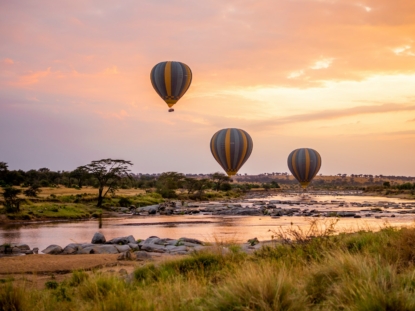
A hot air balloon safari offers a rare aerial look at Ruaha’s wilderness, lifting off in the early morning to drift over the baobab-dotted hills, the river and the bush as the light comes up. From above, the scale of the park and its emptiness become clear in a way no drive conveys.
Balloon flights run in the dry season, typically until around the end of October when conditions allow, and need booking ahead given the park’s remoteness and few operators. It is a memorable addition for those who want it. African Safari Trails arranges the balloon where it is operating during your visit.
Best Time for a Ruaha Safari
Ruaha is at its best in the dry season, when wildlife packs around the shrinking Great Ruaha River, while the green season brings green scenery and the best birding. Some camps close in the heart of the long rains.
June to October (dry season)
Peak game viewing, with elephants and predators concentrated along the river and thin bush for sightings. The driest, best months, though dusty by October.
November to April (green season)
Green and scenic with excellent birding as migrants arrive and lower lodge rates, though wildlife is more dispersed across the park.
March to May (long rains)
The wettest stretch, when some lodges close and access is hardest, so most visitors avoid the peak of the rains.
Give Ruaha at least three nights, and combine it with the southern circuit. Ruaha is big and takes effort to reach, so a rushed day or two wastes the effort of getting there, while three nights or more allows several unhurried game drives, a walking safari and time to enjoy the river without pressure. It pairs naturally with
Nyerere for a southern safari, or with
Mikumi and the
Udzungwa Mountains on an overland loop. African Safari Trails builds Ruaha into a fuller southern trip.
Getting to Ruaha National Park
Ruaha lies deep in southern-central Tanzania near Iringa, and most visitors fly in, taking a light aircraft from Dar es Salaam or Arusha to the Msembe airstrip in the east or Jongomero in the west, which spares the long road. Coastal carriers run these flights, often touching down in Nyerere on the way.
Driving is possible but long, roughly 625 kilometres and nine to ten hours from Dar, or a shorter run from Iringa town about 130 kilometres away. Flying is the comfortable choice for most. African Safari Trails arranges the flights, transfers and any Nyerere or Iringa add-on.
Ruaha National Park Safari FAQ
How much does it cost to enter Ruaha National Park?
Park entry for foreign non-residents is around 30 US dollars per adult per day plus 18 percent VAT, with children roughly 10 dollars, foreign residents about 15 dollars, and East African citizens paying a low shilling rate. Camping carries a further nightly fee of around 15 to 20 dollars. Ruaha is cheaper to enter than the Serengeti. African Safari Trails confirms the current fees and includes them in your quote.
What is Ruaha National Park famous for?
Ruaha is best known for the largest elephant population of any park in East Africa, very large lion prides, and one of Africa’s biggest remaining groups of endangered African wild dogs, all in a remote, uncrowded wilderness. The overlap of eastern and southern species, including sable and roan antelope, adds to the draw. African Safari Trails plans drives to make the most of it.
Is Ruaha worth the effort to reach?
For predator lovers and repeat safari-goers, very much so. The wildlife density, the big prides and the sense of having the bush to yourself reward the longer trip, especially compared with the busier northern parks. First-timers often pair it with Nyerere or the northern circuit. African Safari Trails advises honestly on whether Ruaha fits your trip.
Can you do night drives or boat safaris in Ruaha?
Night game drives are not permitted inside the park, and there are no river boat safaris of the kind found in Nyerere, so the main activities are day game drives and guided walking safaris. A few camps on the boundaries may offer extras. African Safari Trails sets out exactly what activities your chosen camp can arrange.
How many days do I need in Ruaha?
At least three nights is recommended given the travel involved, allowing several game drives, a walking safari and time along the river without rushing. Many travellers combine Ruaha with Nyerere, or with Mikumi and Udzungwa on a longer southern loop. African Safari Trails sets the length and combination around your time and budget.
When is the best time to visit Ruaha?
The dry season from June to October is best for wildlife, when elephants and predators gather along the Great Ruaha River and the bush is thin. The green season from November brings the finest birding and lower rates, though game is more spread out, and the peak of the long rains can close some camps. African Safari Trails times the trip around your goals.
Plan Your Ruaha Safari with African Safari Trails
Arranging the fly-in, choosing a camp near the predator action, and pacing several days so the long trip pays off all go more smoothly with someone who knows Tanzania’s national parks and the southern circuit, so the remoteness feels like a reward rather than a hassle. African Safari Trails has spent years building Ruaha safaris, with guides who grew up beside these rivers and read the dry-season movements by instinct rather than a brochure. They will tell you straight when the elephants and prides are likely along the water, and shape the days around what you most want, with the flights and camp bookings handled quietly in the background.
Want a proper quote, or just a steer on pairing Ruaha with Nyerere on a wider Tanzania safari? Reach out to African Safari Trails and a real person gets back to you.