Serengeti National Park is Tanzania’s most famous safari destination, known for the Great Migration of roughly two million wildebeest and zebra and a dense population of big cats. African Safari Trails arranges Serengeti safaris with game drives, balloon flights, guides and lodges across the park’s sectors. A UNESCO World Heritage Site of nearly 15,000 square kilometres in northern Tanzania, the Serengeti anchors the country’s northern safari circuit alongside the Ngorongoro Crater.
If you picture an African safari, you are probably picturing the Serengeti: endless gold grassland, flat-topped acacias, lions on a rock, and a horizon full of wildebeest. It earns the reputation. This is the stage for the Great Migration, one of the planet’s last great wildlife spectacles, and a year-round home to big cats, elephants and plains game in numbers few places match. It is also large, and timing and sector matter. African Safari Trails handles the planning so you are in the right place at the right time.
Why a Serengeti National Park Safari Stands Out
A Serengeti safari stands out for sheer scale and density of wildlife, set across nearly 15,000 square kilometres of grassland, woodland and granite kopjes in northern Tanzania. The park holds more than seventy large mammal species and over five hundred birds, and unlike many reserves the game viewing is strong in every month, not just one season.
Listed by UNESCO and part of the wider Serengeti-Ngorongoro ecosystem, it pairs naturally with the Ngorongoro Crater on a northern circuit trip. The name comes from a Maasai word for endless plains, which is exactly what you get. African Safari Trails shapes a Serengeti safari around what you most want to see.
The Great Migration Safari
The Great Migration safari is why most people come, the year-round movement of roughly two million wildebeest, zebra and gazelle in a slow clockwise loop around the ecosystem. It is not a single event but a constant cycle, so where you go depends entirely on the month, and chasing it well is the whole art of planning a Serengeti trip.
The drama peaks at the river crossings, when the herds mass on a bank and plunge through crocodile-filled water, though crossings are never guaranteed and depend on rain and luck. Calving, crossings and rut each have their season and place. African Safari Trails bases you where the herds should be for your dates.
The Great Migration is not a thing you go to see on a given day. It is a vast, restless circle turning through the year: calving on the southern plains, columns pouring west, the famous lunge across the Mara River in the north. The skill is simply being in the right corner of the Serengeti when it passes through.
Big Cats and Predator Sightings
The Serengeti is one of the finest places on earth for predators, with large lion prides on the kopjes, cheetahs hunting the open plains, and leopards draped in the riverine trees. The Seronera area in the central park is reliable for big cats year-round, while the Namiri Plains in the east are known for cheetah.
Spotted hyena, jackal and smaller cats fill out the cast, and the migration’s edges always draw hunters. Sightings are never promised, but the odds here are as good as anywhere in Africa. Early morning is prime time. African Safari Trails works with guides who read the predators by instinct.
Big Five Wildlife in the Serengeti
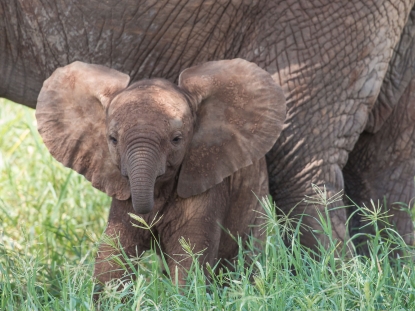
Beyond the cats, the Serengeti holds the rest of the Big Five, with large elephant herds, buffalo, and both black rhino in the protected central and Moru areas, the rhino being the hardest of the five to see. Giraffe, hippo, zebra, topi, eland and many antelope are widespread across the park.
The mix shifts by habitat, from the open southern plains to the wooded Western Corridor and the rocky north, so a few days across different sectors broadens what you see. Rhino sightings in particular take patience and luck. African Safari Trails plans a route that spreads your chances across habitats.
Game Drive Safaris Across the Serengeti Sectors
The classic Serengeti game drive safari runs from a 4×4 with a pop-up roof, exploring the park sector by sector since each offers something different. Central Seronera is the year-round heart for cats and resident game, the south at Ndutu is calving country, the Western Corridor follows the Grumeti, and the north at Kogatende holds the Mara River crossings.
Drives run between six in the morning and six at night, when the gates open and close, with the cool early hours best for predators. Covering two or three sectors over several days gives the fullest picture. African Safari Trails sequences the sectors to match the season and your time.
Game drives
The core safari, by 4×4 across the sectors, strong for big cats and plains game year-round, best in the early morning.
Great Migration
The year-round movement of around two million animals, from southern calving to the dramatic northern river crossings.
Balloon safaris
A dawn flight over the plains and herds, drifting silent above the grassland, followed by a bush breakfast.
Walking safaris
Guided walks in designated areas, swapping the vehicle for tracks, plants and the smaller details on foot.
Hot Air Balloon Safaris Over the Plains
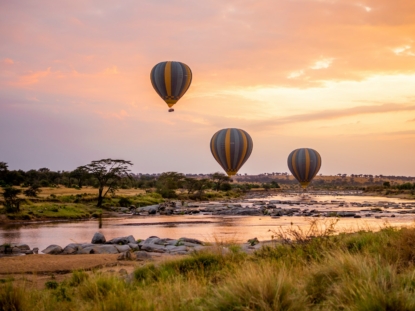
A hot air balloon safari is the Serengeti’s signature splurge, lifting off before dawn to drift silently over the plains as the sun comes up and the land wakes below. From the basket you take in the scale of the grassland and, in season, the herds spread out beneath you, an angle no game drive can match.
Flights last around an hour and usually end with a bush breakfast out on the plains. They run mostly in the central and southern areas and need booking ahead, especially in peak months. It is weather dependent and pricey, but memorable. African Safari Trails books the balloon and the morning around it.
Walking Safaris in the Serengeti
A walking safari swaps the vehicle for your own two feet, exploring designated areas with an armed ranger and a guide who reads tracks, dung and birdsong. It is less about big game and more about the detail the drive flies past, the plants, the insects, the way the bush actually works.
Walks are offered in certain parts of the park and from particular camps, usually as a short morning outing rather than a full day. They add a quieter dimension to a drive-based trip. African Safari Trails arranges walking where it is available alongside the game drives.
Bird Watching in the Serengeti
Bird watching in the Serengeti turns up over five hundred species across the grassland, woodland, rivers and kopjes, from lilac-breasted rollers and ostrich to vultures, eagles and the secretary bird stalking the plains. The green season from November brings migrants and breeding plumage, the best window for birds.
Birding folds into every game drive rather than needing a separate trip, and a good guide will name what you pass without slowing the wildlife watching. The variety of habitats is the draw. African Safari Trails can pair you with a birding guide if feathers are your focus.
Best Time for a Serengeti Safari
The Serengeti rewards a visit in any month, but the best time depends on what you want, since the migration and the weather both shift through the year. The dry season concentrates wildlife and the green season brings calving and birds.
June to October (dry season)
Peak game viewing, with thinner bush and animals near water. The Western Corridor and northern Mara River crossings fall in this window. The busiest and priciest time.
December to March (green season)
Calving on the southern Ndutu plains, with predators close behind, plus the best birding. February and March are prime for the calving spectacle.
April and May (long rains)
The wettest, quietest, greenest months, with muddier tracks but far fewer vehicles and much lower green-season lodge rates.
Match your sector to the month, and consider splitting your stay. The single biggest mistake is booking the wrong corner of the Serengeti for the season, since the migration moves all year, so base yourself at Ndutu for December to March calving, the Western Corridor mid-year, and Kogatende in the north for the August to September Mara crossings. Many travellers split a few nights between two sectors, pairing busy migration areas with a quieter zone. African Safari Trails maps the sectors to your exact dates.
Getting to the Serengeti
Most visitors reach the Serengeti either overland from Arusha, driving in through the Ngorongoro Conservation Area to the Naabi Hill main gate, or by light aircraft to one of the park’s airstrips. Seronera in the centre is the busiest, with Kogatende in the north, Grumeti in the west and Ndutu or Kusini in the south serving the other sectors.
The overland route takes the best part of a day but shows the country and pairs with the crater and Lake Manyara National Park, while flying saves time for the remote sectors. Arusha and Kilimanjaro airports are the regional gateways. African Safari Trails arranges the transfers, flights and the crater leg around your Serengeti days.
Serengeti National Park Safari FAQ
How much does it cost to enter Serengeti National Park?
Park entry for foreign non-residents is around 70 to 83 US dollars per adult for each 24 hour period, plus 18 percent VAT, with children aged 5 to 15 paying roughly 20 to 24 dollars and under fives free. Staying inside the park adds a concession fee of about 60 dollars per night. East African citizens pay a much lower rate. Most safari packages fold these in. African Safari Trails confirms the current fees and includes them in your quote.
When is the best time to see the Great Migration?
It depends which phase you want. The southern Ndutu plains hold the calving from December to March, the Western Corridor sees movement and Grumeti crossings around June, and the dramatic Mara River crossings in the north peak in August and September. No crossing is ever guaranteed. African Safari Trails bases you where the herds should be for your travel dates.
How much is a hot air balloon safari?
A Serengeti balloon safari typically costs around 550 to 600 US dollars per person for a dawn flight of about an hour, usually including a bush breakfast afterwards. It is weather dependent and books up fast in peak season, so reserving ahead matters. African Safari Trails arranges the balloon flight and the morning around it.
How many days do I need in the Serengeti?
Three to four days lets you cover two sectors and travel at a sensible pace, while a week allows a fuller spread across the park or a focused migration chase. Day trips do not do the scale justice given the distances. Many pair the Serengeti with the Ngorongoro Crater and Tarangire National Park. African Safari Trails sets the length around your priorities and budget.
Can you do night game drives in the Serengeti?
Standard game drives run only between 6am and 6pm, when the park gates open and close, so night drives are not generally available inside the park. A few private concessions and luxury camps on the park’s edges can arrange after-dark drives. African Safari Trails can include a concession stay if a night drive matters to you.
Is the Serengeti good for a first safari?
Yes. The variety, the density of wildlife and the year-round game viewing make it one of the most rewarding first safaris in Africa, and it pairs easily with the Ngorongoro Crater for an unmissable northern circuit. The main planning task is matching your sector and dates to the migration. African Safari Trails handles that so a first trip lands well.
Plan Your Serengeti Safari with African Safari Trails
Working out which sector to base in for your dates, securing camps in the right migration zone, and pacing the drives against a balloon flight or the crater all go more smoothly with someone who knows the park, so the planning never lands on you. African Safari Trails has spent years building Serengeti safaris, with guides who read the plains and the seasons by instinct rather than a brochure, and who will tell you straight when a river crossing is likely and when it is a gamble. Tight budget or open one, the days get shaped around the wildlife you most want to see, with the permits and camp bookings handled quietly in the background.
Explore more Tanzania national parks or browse our full range of Tanzania safaris. Want a proper quote, or just a steer on when to come? Reach out to African Safari Trails and a real person gets back to you.